
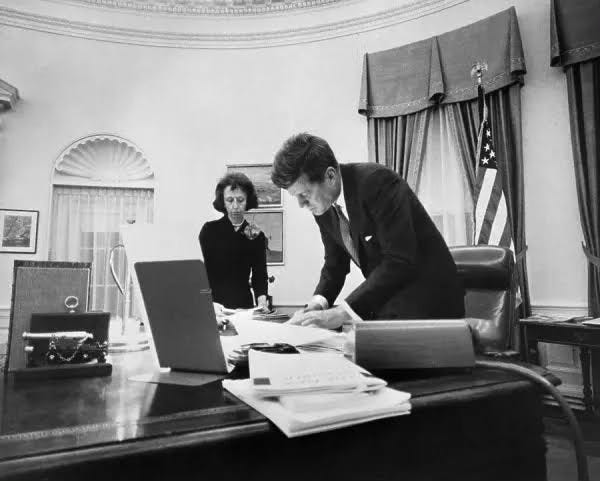
“From the catbird seat that I had during my 12 years as John F. Kennedy’s Personal Secretary I would have to say that, in my opinion, President Kennedy’s death in Dallas, Texas, was a deliberate professional political murder, planned by a group in government who wanted him removed from office.” — Evelyn Lincoln
In March of 2026, JFK Facts reported on an addendum to the unpublished memoir of President John F. Kennedy’s personal secretary, Evelyn Lincoln, titled “I Was There.” In this addendum, Lincoln wrote down her thoughts concerning who was behind the assassination of the man she had once worked for and deeply admired. An extract from the addendum is published here in full (links have been added by the author):
The other question, which I will try to answer, to the best ot my knowledge is “who conspired to assassinate President Kennedy.”
Those threatening words about “assassination”, which my husband, Abe, heard before the President went to Dallas have smoldered in my mind all of these years. I have spent many, many hours trying to figure out who, or what faction, or organization conspired and did the actual planning to bring about his assassination. It is ironic, I feel, that so many of these factions, who felt so strongly against the President had their people in or around Dallas at the time of the assassination. It was reported that radical “nigger-haters” were there; members of the John Birch Society and organized crime were there, as well as, Texans who hated him.
Any one of these factions, I reasoned, could have hired a hit man. I have heard that they come dime a dozen. Likewise, the atmosphere in Dallas at the time was filled with hatred and suspicion. There was terrific infighting going on among the politicians and many of the citizens. The time was ripe to pull this off. Just a few days before, Adlai Stevenson visited Dallas. He was bombarded with tomatoes.
Another thing which bothers me is why so much time and effort is spent on where the bullet hit the body. It seems to me that it is not so much where the bullet hit, as it is, did someone hire a man to fire the shot which hit the body. Kennedy died.
I do not point a finger at any one of the individuals or factions who might have disliked Kennedy so much they had him assassinated, but I am struck by coincidental things which happened along the way—they puzzle me.
Over the years there have been people—there have been organizations—that have wanted to do away with person or persons whom they felt were in their way or did not prescribe to their way of life.
Many factions had their reasons for wanting the President to get out of their way. There were those in the 1960 campaign who wanted to stop him, but they were unsuccessful and he became President. As he went along he collected others who saw him a danger to their cause.
He was a Catholic. That gave him a built in opposition right from the start. The anti-Catholic, Ku Klux Klan faction had opposed Al Smith when he ran for the Presidency and their opposition was one of the factors that helped defeat him. This same faction tried hard to defeat the President, and even though he won, their dislike toward him did not disappear.
There were also many, many people in the United States at that time who were hysterically opposed to the civil rights movement. In 1961 it was considered political bravery to endorse equality before the law in front of an audience of southern whites. The Kennedys brought protection to the freedom riders when at that time the local and state police refused to protect them. A gang of whites, including the Ku Klux Klan attacked the buses of freedom riders in Alabama. Evidence of that opposition was also seen in the difficulty the Kennedys had in upholding the law to integrate the schools in Mississippi and Alabama. Also, the killings of civil rights activists and the violence when the blacks took to the streets. These anti-civil rights organizations and groups, who didn’t want the President to proceed further in his efforts on behalf of the colored people, were outwardly opposed to him. Likewise, J. Edgar Hoover, Director of the F.B.I. detested Dr. Martin Luther King, whom the Kennedys had befriended in 1960, and did everything possible to destroy him.
Ngo Dinh Diem’s wife, who at the time of her husband’s death was traveling all over the United States charging that the President was turning his back on Viet Nam. As soon as she learned that her husband had been killed she lashed out hysterically against the President, calling him a “murderer.” She and her followers were vehement. And that was in November 1963.
There was resentment, to be sure by the terrorist revolutionists in the communist community for the successful handling by the President in standing up against Khrushchev, in the Cuban Missile Crisis. Their subversive operations were no doubt disturbed by their being outsmarted and their prestige was at stake.
Within many countries where dictators hold sway there are groups or individuals who dislike or hate our form of government. They could easily be persuaded to enter into any scheme or plot to do away [with] a President, even given ample funds to pursue this objective.
The underlying current that ran through all the mob activities was their inability to regain their massive operations in Cuba, after Castro had overthrown the Batista regime. The Mob and extreme right-wing elements, with the assistance of the CIA, together with the Cuban exiles were constantly conspiring to overthrow Castro.
The Eisenhower Administration, and especially Richard Nixon who was a rabid communist hater, went along with the Bay of Pigs plan devised by these same elements, and this plan was passed along to President Kennedy, who approved it. The President, however, when it became apparent that the plan would fail, unless there was American military intervention, called the operation off.
He antagonized the Cuban exiles and the CIA by his refusal to go along with the plan, and the CIA was likewise infuriated when the President said he would like to blow the CIA to pieces because of their mishandling of the plan. The antagonism between various members of the CIA and the President continued throughout his administration.
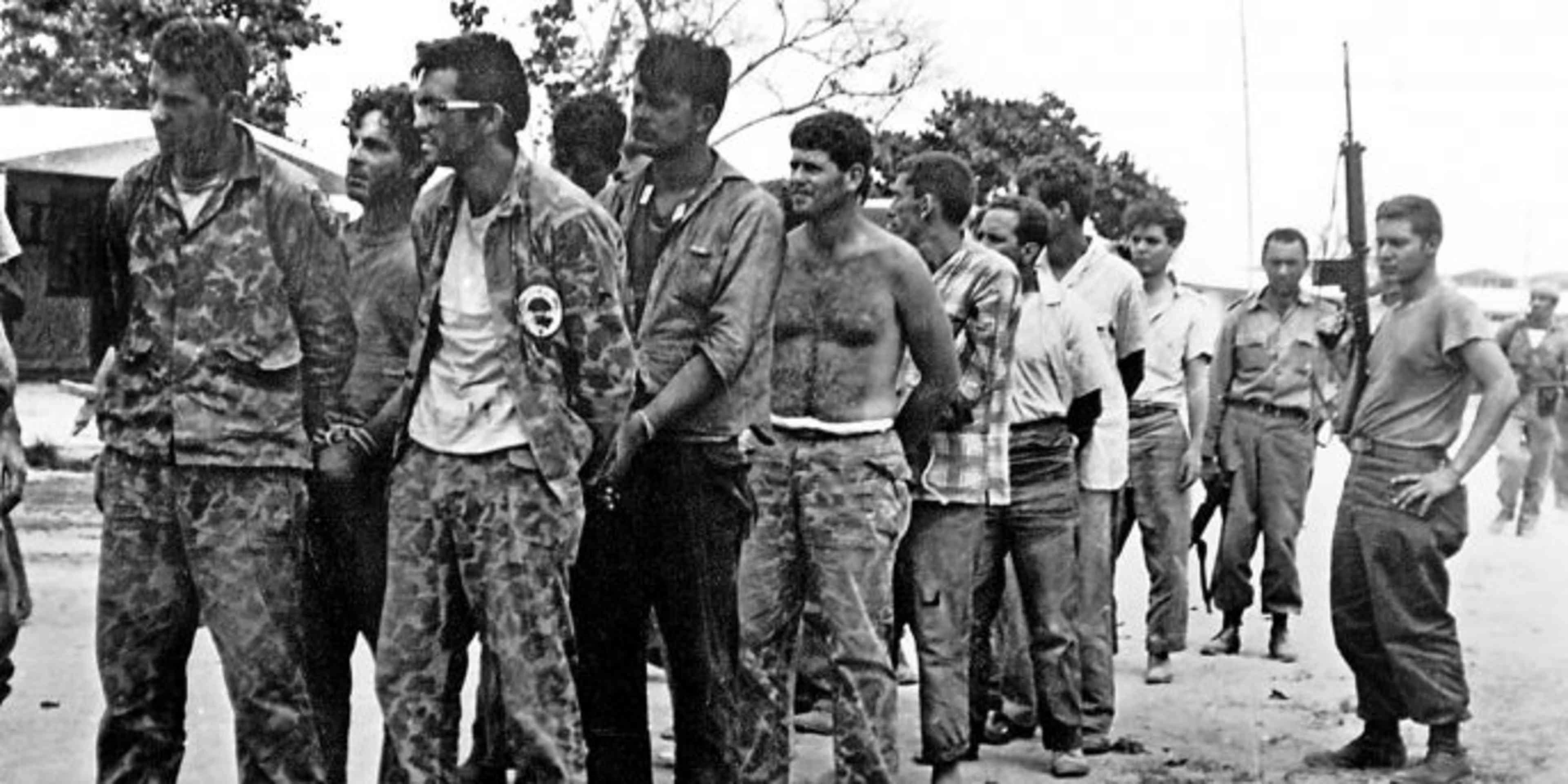
Thus a linkage grew between the Mob, the CIA and right-wing extremists over what they felt was the President’s moderation toward Castro, his civil rights proposals, his drive for peace and the Kennedys[’] crusade against organized crime. Therefore, it is logical to conjecture that these elements could have formed a conspiracy to assassinate the President.
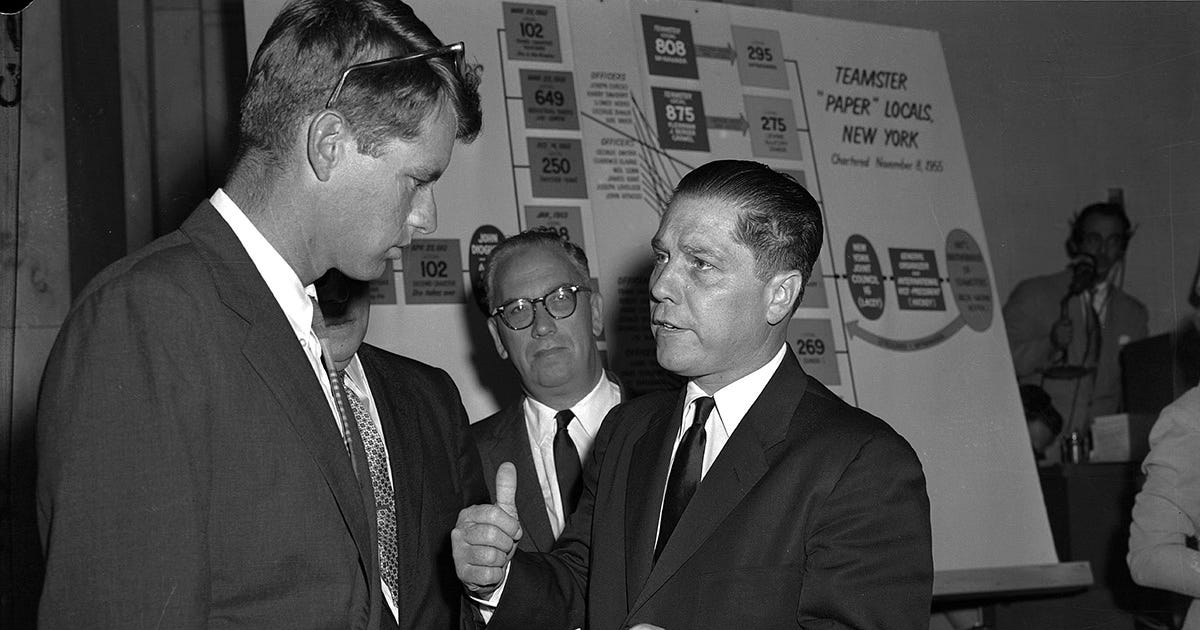
It is understandable why Hoffa and organized crime should dislike the President. Robert Kennedy, the President’s brother, while Chief Counsel for the Senate Rackets Committee and also as Attorney General, and supported by the President, worked very hard to rid this country of syndicated crime—a very worthwhile endeavor. Hoffa, head of the Teamsters Union, was indicted (later sent to prison). That brought animosity, not only among the Teamsters Union, but also other organized crime operations, who were fearful that the Kennedys might investigate them. The Attorney General was planning massive attacks on the Mob’s Las Vegas base as late as October 1963. Therefore, if any member of organized crime would desire to make a contract with a hit man to assassinate the President, one of these men would certainly be Teamster boss Jimmy Hoffa.
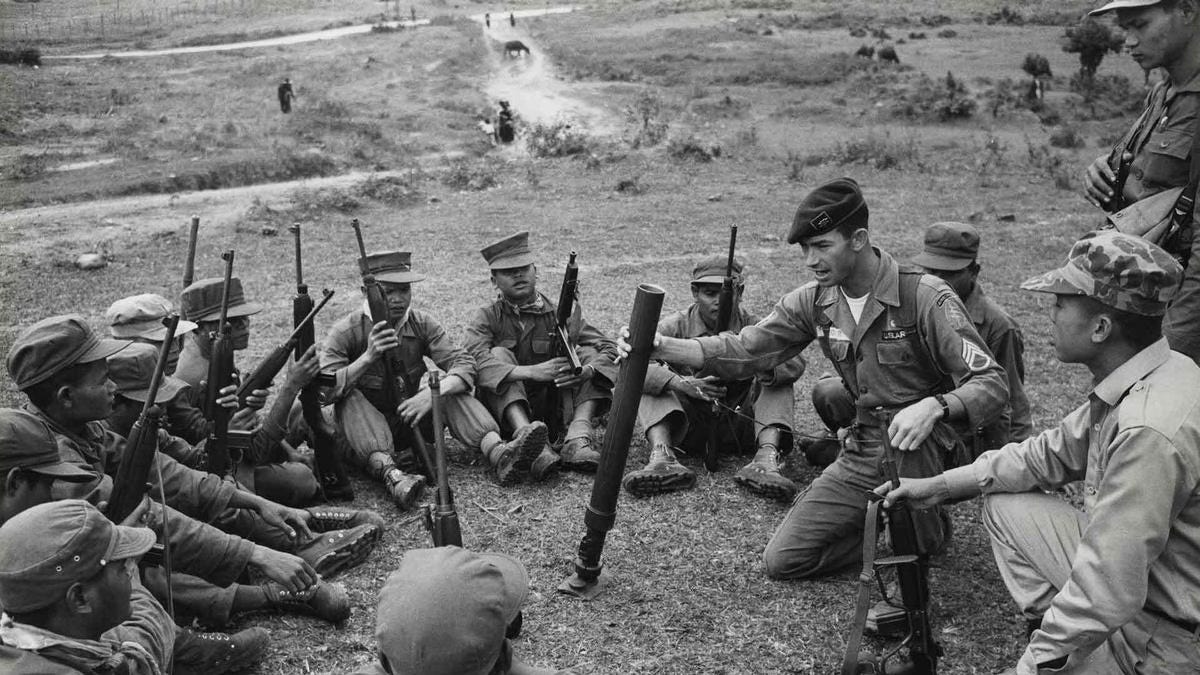
After the Cuban Missile Crisis in October 1962, and there was no military involvement, the President felt that the time was ripe to promote the cause for peace. And because of this desire on the part of the President he expressed his concern over the involvement of the United States military in Viet Nam and said following an off the record meeting on Viet Nam “I am going to phase out the withdrawal of American forces in Viet Nam. I know I’ll be criticized, but I have been criticized before.”
In a report by Defense Secretary Robert McNamara and General Maxwell Taylor on October 2, 1963 they stated that it was their objective to terminate the major part of the United States military involvement in Viet Nam by 1965.
Likewise, one of the first questions the President was asked at his Press Conference at 4:00 pm on October 31st was: “Mr. President, back to the question of troop reductions, … is there any speedup in the withdrawal from Viet Nam intended?”
The President answered: “Well, as you know, when Secretary McNamara and General Taylor came back they announced that we would expect to withdraw a thousand men from South Viet Nam before the end of the year, and there has been reference to that by General Harkins. If we are able to do that, that would be our schedule.”
Two days before the President went to Texas, on November 19, 1963, Defense Secretary Robert McNamara speaking to the New York Economic Club stated that “a major cut in defense spending is in the works.”
All of these actions by the President and his administration inflamed the radical right, and more specifically the Birch Society, whose main purpose to be in existence was their ardent hatred of communism.
H. L. Hunt, a Dallas oil multimillionaire, led the attack on the President, and had made threatening remarks about him.
As a follow-up on the Birch Society’s dislike of the President handbills were distributed on the streets of Dallas a few days before the President’s visit, which were emblazoned with the words “Wanted for Treason” and underneath was a picture of Kennedy.
But that was not enough, when the President flew into Dallas on November 22nd he was greeted with an ad in the Dallas Morning News. It was a black bordered full page ad with scurrilous attacks on his policies. This ad was co-sponsored by Nelson Bunker Hunt, son of H. L. Hunt, and John Birch Society members.
There were others in Texas who were upset with the remarks of cuts in defense, besides Hunt, and they were the big operators in the armaments industry, and much of that industry was based in Texas. Whenever there is a war or a build up in our defense, the armaments industry profits tremendously! And so does the oil industry, in that it takes gallons and gallons of oil and gas to operate the military equipment.
The President also had political adversaries, who would stand to gain greatly if something happened to Kennedy.
Richard M. Nixon was, no doubt, very upset when the President defeated him in the Presidential race in 1960. Nixon based his entire political career on communism and therefore it is understandable that he would be in agreement with the plan that was put together by the Cuban exiles and the CIA to invade Cuba and overthrow Castro. And then there was that strange alliance between Nixon, the Cuban exile forces and members of the CIA who participated in the Bay of Pigs.
It is strange that many of these CIA members were later involved with Nixon’s break in of the Watergate office of Lawrence O’Brien, and also worked in the Nixon administration in other “dirty tricks” operations.
Clint Murchison, Jr., a Texas oil tycoon was a big contributor of Nixon, as well as one of Lyndon Johnson’s earliest political supporters. Nixon spent November 20-21, 1963 in Dallas in a Pepsi-Cola Bottlers Association meeting, leaving shortly before Kennedy arrived on November 22.
There was no doubt that Lyndon B. Johnson was upset when the President defeated him in the race for the Presidential nomination in 1960.
Mr. Johnson, however, was successful in his maneuver to be on the ticket with him as the Vice Presidential nominee, but once he became Vice President he never quite accepted his secondary role.
His fading importance in the Kennedy administration, together with the pending investigation of Bobby Baker’s shady activities, which were sure to involve him, gave him cause for concern. As soon as Baker’s problems began in September 1963 Johnson’s close friend, Abe Fortas, became Baker’s attorney. Fortas was replaced in November 1963 by Edward Bennett Williams, who defended Teamster Jimmy Hoffa.
Johnson, realizing that he might be dropped from the President’s ticket in 1964, left Washington the end of October to go back to his ranch in Texas to await the President’s visit—over three weeks ahead. And many of his associates went with him.
J. Edgar Hoover, the Director of the FBI, who more or less ignored the activities of organized crime before Robert Kennedy became Attorney General was also a good friend of Clint Murchison, Texas oil tycoon.
Murchison paid Hoover’s hotel bills when he stayed at the Del Charro Motel in California, which was owned by Murchison. And as has been previously mentioned, Murchison was a backer of Lyndon Johnson and had been involved with Bobby Baker and the Teamsters. And, of course, Hoover was a close friend of Lyndon Johnson.
J. Edgar Hoover, who loathed Robert F. Kennedy as much as he did Dr. Martin Luther King, kept voluminous personal files on John F. Kennedy’s activities, which he used to his own advantage. With the opening of Hoover’s secret files under the Freedom of Information Act it has been shown that rumors, hearsay, trivia and potentially embarrassing information was compiled and saved. However, little attempt was made to check any of this information for accuracy. Lyndon Johnson had access to Hoover’s secret files and many a rumor was started by them through all of this unchecked information.
There is definitely an intertwining of people and factions in much of the opposition and efforts to “stop” or destroy the President.
In the Parkland Hospital in Dallas following Kennedy’s assassination, Mr. Johnson maintained that there had been a conspiracy before he rushed out to get on Air Force One. However, soon after returning to Washington, he hurriedly set the wheels in motion to build a case against Lee Harvey Oswald as being the lone assassin. By executive order on November 29, 1963 he created the Warren Commission to investigate the assassination.
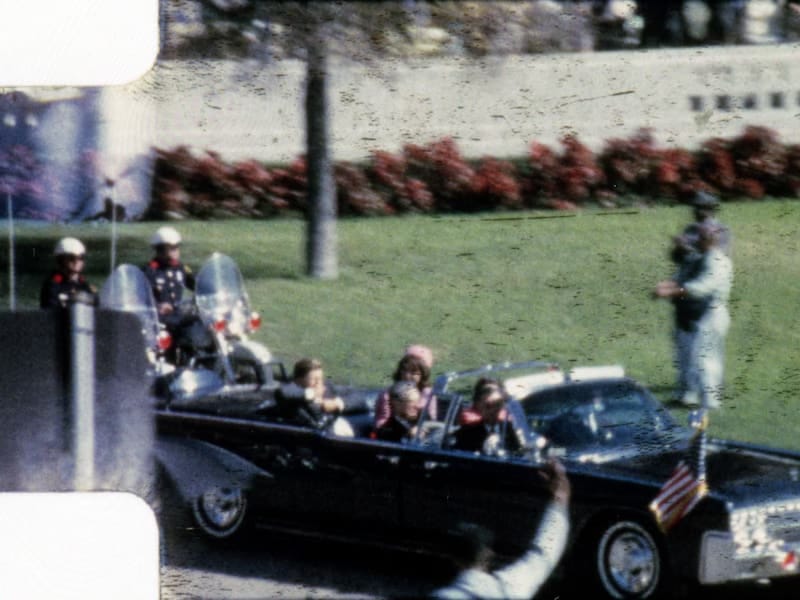
Then months later the Warren Commission, without calling many, many witnesses who might have been helpful, and without the benefit of withheld information by Hoover’s FBI, filed its report confirming that Lee Harvey Oswald was the lone assassin.
Not satisfied with the Warren Commission report, after two years of investigation, the House Committee on Assassinations determined that there was conspiracy.
From the catbird seat that I had during my 12 years as John F. Kennedy’s Personal Secretary I would have to say that, in my opinion, President Kennedy’s death in Dallas, Texas, was a deliberate professional political murder, planned by a group in government who wanted him removed from office.
Ms. Lincoln closed:
The President did not have the opportunity to run for reelection in 1964. Had he lived there would not have been a Viet Nam war and hopefully there would not have been a lost generation of young people who lost faith in our government.
Ari