
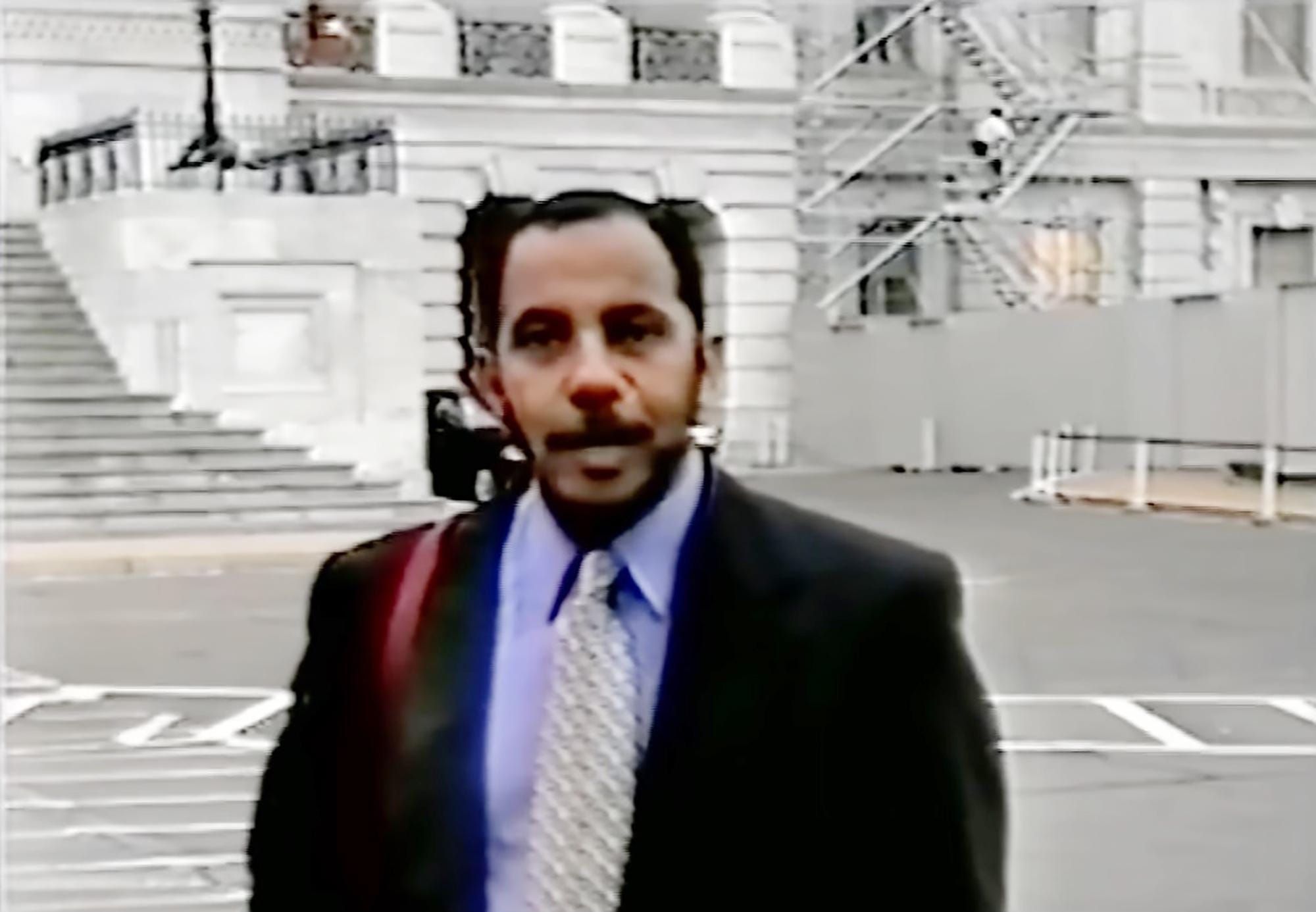
In the summer of 1999, a middle-aged Saudi named Omar al-Bayoumi stood before the Capitol building in Washington DC with a camcorder and spoke into the lens as if he were filing a report. “We greet you, the esteemed brothers, and we welcome you from Washington,” he said. Later: “Omar al-Bayoumi from Capitol Hill, the Capitol building.” He filmed entrances and exits, security posts, and a model of the building. He noted the Washington Monument and promised to “report to you in detail what is there.” He remarked that the airport was not far away. He referred cryptically to a “plan.”
Saudi Arabia’s lawyers call that tape a tourist souvenir—capturing artwork, flowerbeds, a squirrel on the White House lawn. Plaintiffs’ experts, and retired FBI supervisor Richard Lambert, call it pre-operational casing of a target that Al Qaeda’s leaders, that same spring, had already agreed they wanted to hit.
This is the story of Omar al-Bayoumi and an FBI/CIA/White House cover-up that kept the truth about Saudi Arabia’s complicity in the 9/11 attacks from the 9/11 Commission, the 9/11 families, and the American people for over two decades.
The Student Who Never Studied
Bayoumi arrived in San Diego around 1994, posing as a graduate student. San Diego State had him for a single remedial English semester. He told some people he was earning a doctorate; others, that he flew for the Saudi airline. What he actually did was orbit mosques with a video camera, hand out money, help found a Saudi-funded mosque in El Cajon, and draw a paycheck as a ghost employee of Dallah Avco—an aviation contractor tied to the Saudi Defense Ministry. When the company tried to cut him loose in 1999, a Saudi official marked a letter “extremely urgent” and ordered the arrangement continued.
Worshippers noticed. Henry Bagadan, a Pakistani businessman at the Islamic Center, told Newsweek that Bayoumi followed young Saudis around and appeared to report back to the Kingdom. The FBI’s best San Diego source believed he “must be an intelligence officer for Saudi Arabia or another foreign power.” The Bureau opened a preliminary inquiry in 1998. Headquarters later preferred a friendlier portrait: gregarious accountant, devout moderate, unlikely spy.
That portrait was fiction.
The Chance Meeting That Wasn’t
Nawaf al-Hazmi and Khalid al-Mihdhar—known Al Qaeda operatives and future hijackers, who spoke almost no English—landed in Los Angeles on January 15, 2000. Within weeks they were in Bayoumi’s orbit. His story, accepted for years by FBI headquarters and the 9/11 Commission, was that he bumped into them by accident at a Culver City café after renewing his passport at the Saudi Consulate, then kindly helped them settle in San Diego: an apartment, a co-signed lease, a bank account, and introductions.
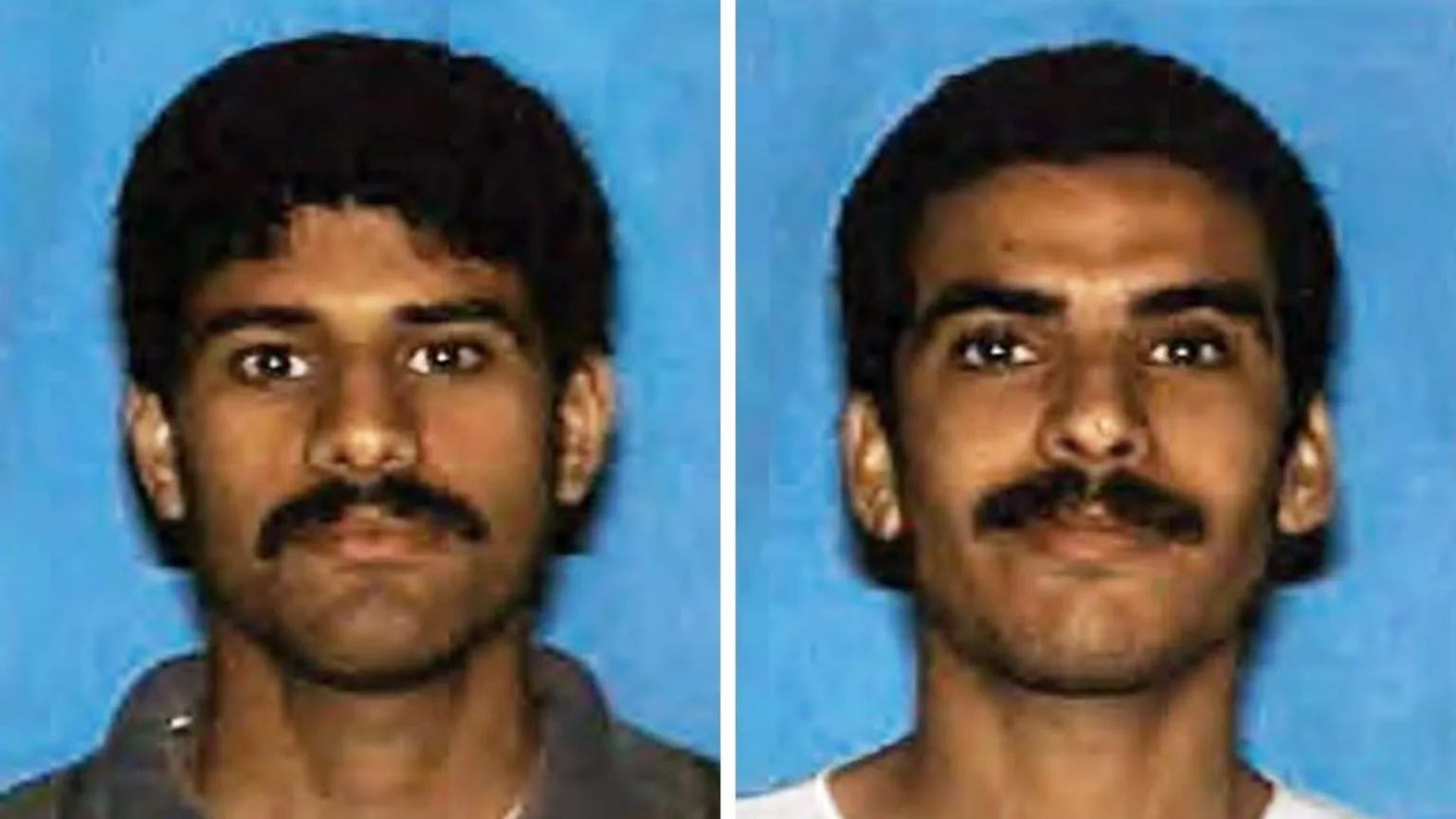
We now know Bayoumi was no tourist guide or humanitarian, ever since President Joe Biden, on September 11, 2021, signed an executive order declassifying the remaining 27 pages of theretofore top-secret 9/11 files.
Bayoumi renewed the passport the day before the café encounter. A witness told FBI agents he had been waiting by a window for the men, then talked with them at length. A 2016 FBI Operation Encore summary—declassified years later—said Fahad al-Thumairy, the Saudi Islamic Affairs diplomat and King Fahad Mosque imam, “tasked” help for the visitors and called them “two very significant people,” more than a year before the attacks. Phone records show dozens of contacts between Bayoumi and Thumairy. Both sat near Al Qaeda operative Anwar al-Awlaki’s contact tree. Bayoumi hosted a gathering in the hijackers’ apartment that introduced them into a local support circle—IDs, English classes, a used car, and flight school.
The Commission called Bayoumi “an unlikely candidate for clandestine involvement with Islamist extremists.” Judge George B. Daniels, who presided over a multi-district lawsuit that seeks redress for the victims of the 9/11 attacks and their families, later found a reasonable inference that Bayoumi’s apartment help was not Good Samaritan charity and that he and a Saudi diplomat were coordinating with the Saudi government when they assisted the hijackers.
Asset of Saudi Intelligence
In June 2017—thirteen years after the Commission closed its books—the FBI put in writing what their agents in San Diego had sensed for years. From 1998 until the attacks, Bayoumi “was paid a monthly stipend as a cooptee of the Saudi General Intelligence Presidency (GIP) via then Ambassador Prince Bandar bin Sultan Al Saud.” He collected information on persons of interest in the Los Angeles and San Diego Saudi communities and forwarded it to Bandar, who informed the GIP.
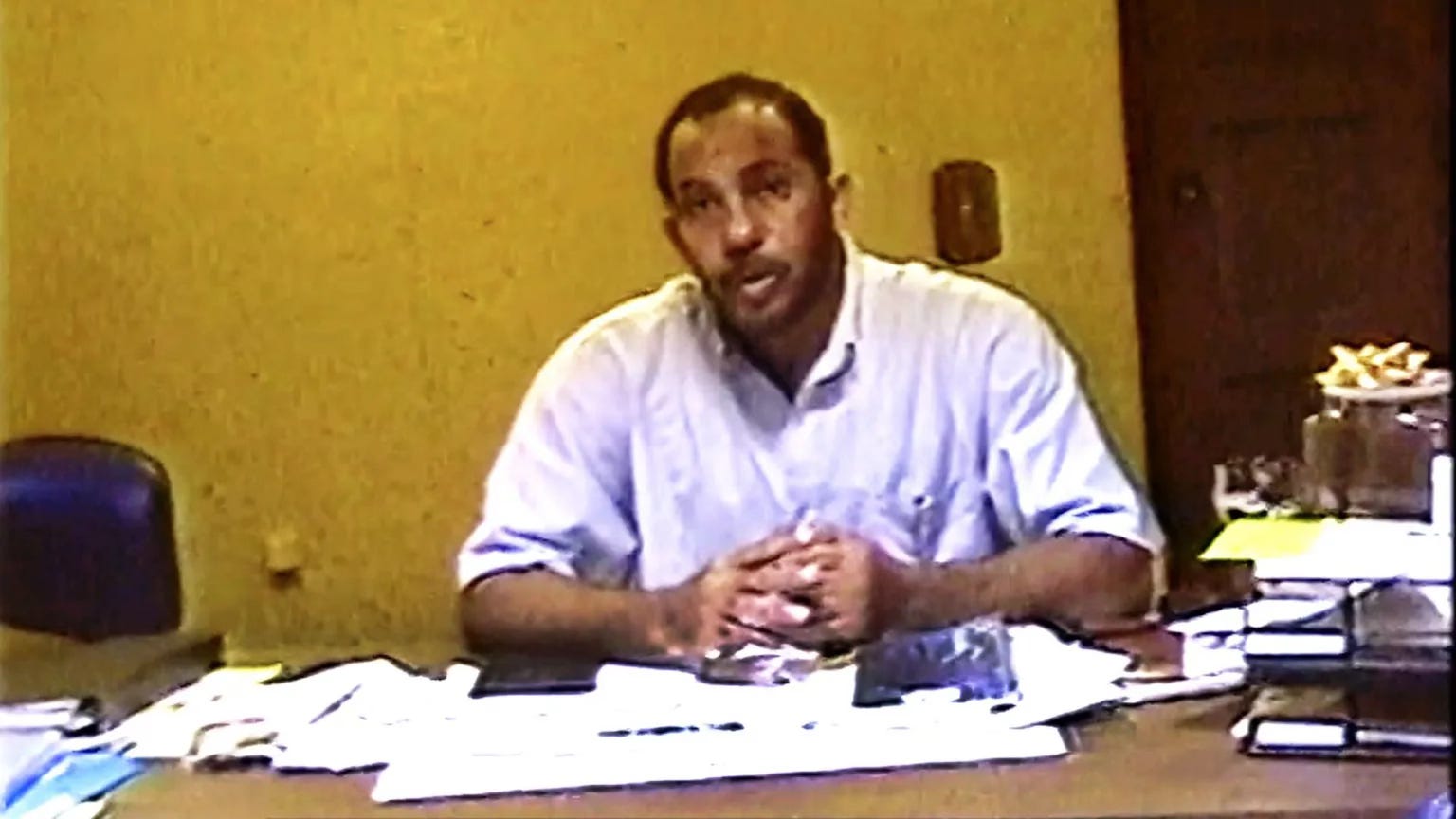
The assessment notes the Commission never confirmed the spy allegations. “The above information confirms these allegations,” the assessment said. A separate 2017 memo, citing source reporting, judged there was a “50/50 chance” Bayoumi had advanced knowledge the September 11 attacks would occur. Daniel Gonzalez, the FBI’s Operation Encore lead, put it more bluntly: “We could see from a block away that Bayoumi was an intelligence guy…It’s evident now that he was tasked with helping the hijackers—that he was running a clandestine operation. So, who was running it?”
Capitol Hill and the Notebook
Returning to the 1999 video. Bayoumi toured Washington with two Saudi “propagators,” Adel al-Sadhan and Mutaeb al-Sudairy. Sudairy, whom Bayoumi called the emir of the trip, had lived in Missouri with Ziyad Khaleel, who delivered a satellite phone to Osama bin Laden before the 1998 Al Qaeda embassy bombings in Kenya and Tanzania. Both clerics later denied even knowing Bayoumi. British investigative evidence proved otherwise.
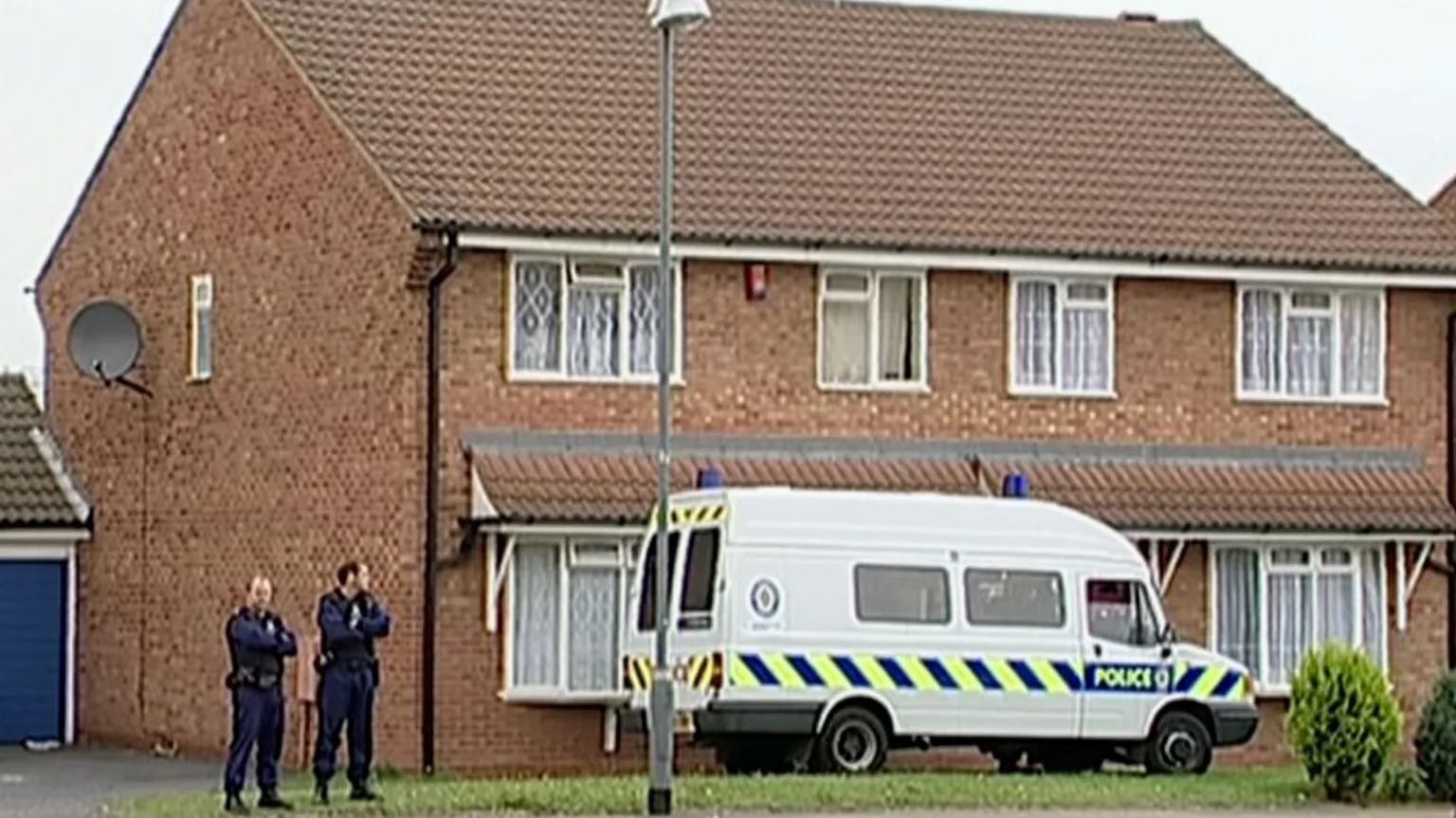
British police seized the Capitol tape—and roughly eighty other videos, plus a trove of documents—from Bayoumi’s Birmingham apartment about ten days after 9/11. An FBI report dated October 11, 2001, says copies of all recovered exhibits were sent by FedEx to the FBI field office in New York. The Capitol video never reached the San Diego field office. Gonzalez and his colleagues did not see it for more than two decades. Former CIA Director George Tenet and Michael Morell say they were unaware of it. Gina Bennett, the CIA analyst who first warned Washington about bin Laden’s global jihadist ambitions, told 60 Minutes the tape is not tourism: “Who does a tourist video that is reporting back on, ‘This is where that building is, and here’s where the security guards are.’”
Among the Birmingham materials was something else: a handwritten document with an airplane sketch and a mathematical equation—a notebook page with notes on plane height and distance to the horizon. Stashed in a Washington warehouse for a decade, the boxes were nearly destroyed until an evidence technician called Gonzalez in 2012. Aviation experts the FBI consulted concluded a pilot could use the formula to calculate a rate of descent toward a target on the horizon. An FBI report ends bluntly: the expert “could not think of any other reason for the equation…than to calculate the descent rate from a given altitude.”
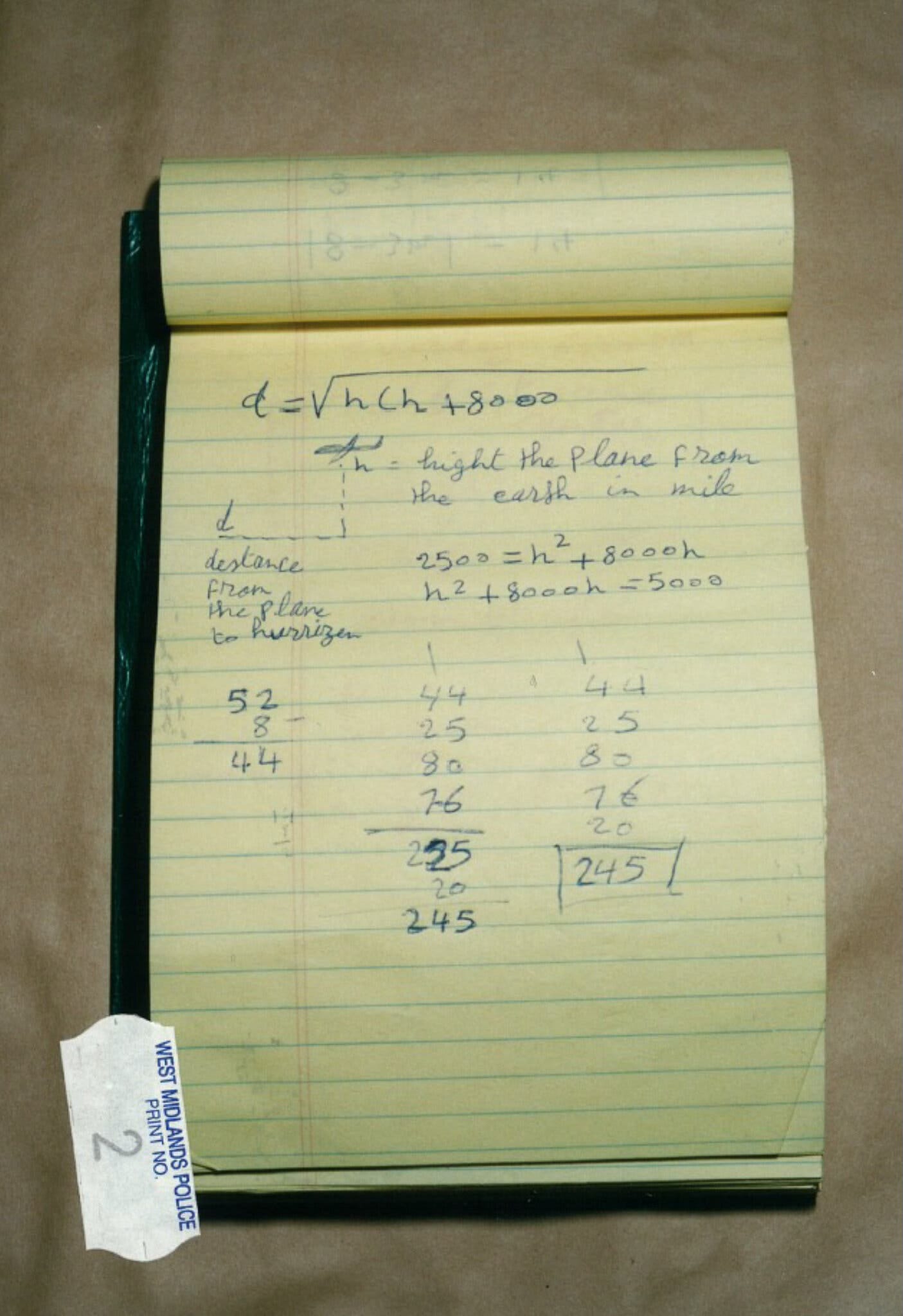
In a 2021 deposition, Bayoumi admitted the sketch was his. He claimed it might have been high-school math he was trying to remember. No public proof shows he handed the equation to any hijacker—and no innocent explanation satisfies anyone who has flown an approach without a GPS glide path.
Spy, Facilitator—or Both?
Was Bayoumi a Saudi intelligence asset who wandered into Al Qaeda’s path? An Al Qaeda facilitator collecting a Saudi paycheck? A man playing both sides as a double agent?
What is fact: the FBI’s 2017 assessment confirms him as a GIP asset paid through Bandar’s channel. What is expert judgment, not a courtroom verdict: Bennett concluded Bayoumi “was an Al Qaeda facilitator” with ideological sympathies for the network, without whose help Hazmi and Mihdhar “may very well have been caught.” What is speculation is the theory, aired by some former investigators, that Bayoumi might have been tasked to approach the two Al Qaeda hijackers as part of a recruitment play that went catastrophically wrong. The CIA has long denied any such scheme. No American prosecutor has charged Bayoumi, who lives in Saudi Arabia now.
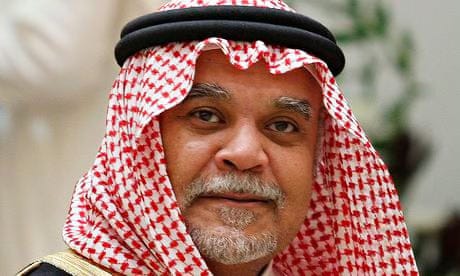
His San Diego circle tightens the Bandar thread. Osama Bassnan, a close Bayoumi associate and vocal bin Laden supporter, lived across the street from the hijackers. Princess Haifa, Bandar’s wife, sent Bassnan’s wife roughly $2,000 a month—checks totaling some $74,000, supposedly for “nursing services” the FBI could not substantiate. Bayoumi’s wife tried to deposit some of those checks. Bassnan told an FBI asset he did more for the hijackers than Bayoumi did. The Joint Inquiry’s 27 pages put these leads in black and white; Washington sat on them for fourteen years.
Double Agent—or a Penetration Gone Wrong?
The public record leaves two theories standing over Bayoumi’s body of work, and neither comes from the 9/11 Commission. One holds that he was, in effect, an Al Qaeda asset or operative working also for Saudi intelligence—a classic double agent. The other holds that Saudi intelligence—possibly with a wink from CIA partners desperate for sources inside bin Laden’s organization—used Bayoumi to approach Nawaf al-Hazmi and Khalid al-Mihdhar, to monitor them, even to try flipping them, and that the play went catastrophically wrong. Both theories explain more than “chance hospitality.”
In August 2024, The New York Times put the fork in the road on the public record. Mattathias Schwartz reported, for the first time, about the trove of material seized from Bayoumi’s Birmingham home ten days after the attacks by Scotland Yard. Former U.S. intelligence officials told Schwartz the material could change the story of Bayoumi’s possible involvement in the plot. They also asked the question Washington has spent a generation dodging: why wasn’t this shared with the 9/11 Commission?
Michael J. Morell, former deputy director of the CIA, told the Times that Congress or the Justice Department should investigate the lapse. “What happened to this stuff after it was turned over to the FBI?” he asked. The Bureau declined to comment. George Tenet, who ran the CIA on September 11, said through a spokesman that the new evidence was significant enough to require further evaluation: “The 9/11 families deserve no less.” Philip Zelikow, the Commission’s executive director, said the panel never saw the airplane drawing. Otherwise, he told Schwartz by email, “we would have asked Bayoumi about it in our interviews of him.” The Commission’s 2004 conclusions, Zelikow added, were “dependent on the evidence available at that time.”
The BBC has now filled in what that Riyadh interview actually looked like. In October 2003, Zelikow, a senior staffer, and an FBI headquarters agent questioned Bayoumi in the presence of the Mabahith, the Saudi secret police. Commission notes record that he “was told that no one believes he knowingly helped the hijackers carry out their terrorist mission.” He called himself “a victim of the victims.” The delegation broke for a multi-course dinner hosted by the Mabahith—without him. Afterward, the secret police said they “would like to see him cleared.”
When the report came out in July 2004, some Commission staff objected to the line that Bayoumi was “an unlikely candidate for clandestine involvement with Islamist extremists.” The compromise was to hang that judgment on “our investigators who have dealt directly with him and studied his background”—four and a half hours, including dinner. They never saw some of the vital evidence that Scotland Yard seized. Mary Galligan, who headed the FBI’s 9/11 investigation, has said the Commission had “access to everything.” Zelikow, asked by the BBC, said the panel had been “careful about whom to accuse of complicity in mass murder.”
60 Minutes—in a report first broadcast in April 2025—put names and anger under those same facts. Cecilia Vega walked retired San Diego agents and a career CIA analyst through the Capitol tape and the notebook page. What they said on camera is the sharpest public statement yet of the double agent theory: Bayoumi as Al Qaeda’s facilitator hiding inside the Saudi government’s intelligence apparatus.
On the tape, Bayoumi asks a bystander to film him in front of the Capitol and speaks in Arabic as if filing a report: “I am transmitting these scenes to you from the heart of the American capital, Washington.” He records entrances and exits, security posts, a model of the building, and nearby landmarks. He points out the Washington Monument and says he will “get over there” and “report to you in detail what is there.” He notes the airport is not far. He refers to a “plan.”
Richard Lambert, the retired FBI supervisor who led the initial San Diego 9/11 investigation and now consults for the 9/11 families, told 60 Minutes what that looks like to a counterintelligence eye. “What I see Bayoumi doing is going out and making a detailed video record of the Capitol from all its sides, and then conducting that 360-degree panoramic view.” Anyone who has flown into Washington knows the Monument is one of the first things on the horizon—“if you know where your other targets are, it helps guide you to your intended target.” Federal investigators believe Flight 93’s likely target was the Capitol. When Vega asked what “plan” Bayoumi was talking about, Lambert did not mince words: “I think he’s talking to the Al Qaeda planners who tasked him to take the pre-operational surveillance video of the intended target.” The timing, he said, puts the video “within 90 days of the time when senior Al Qaeda planners reached the decision that the Capitol would be a target”—the same window when bin Laden approved Khalid Sheikh Mohammed’s “planes operation.”
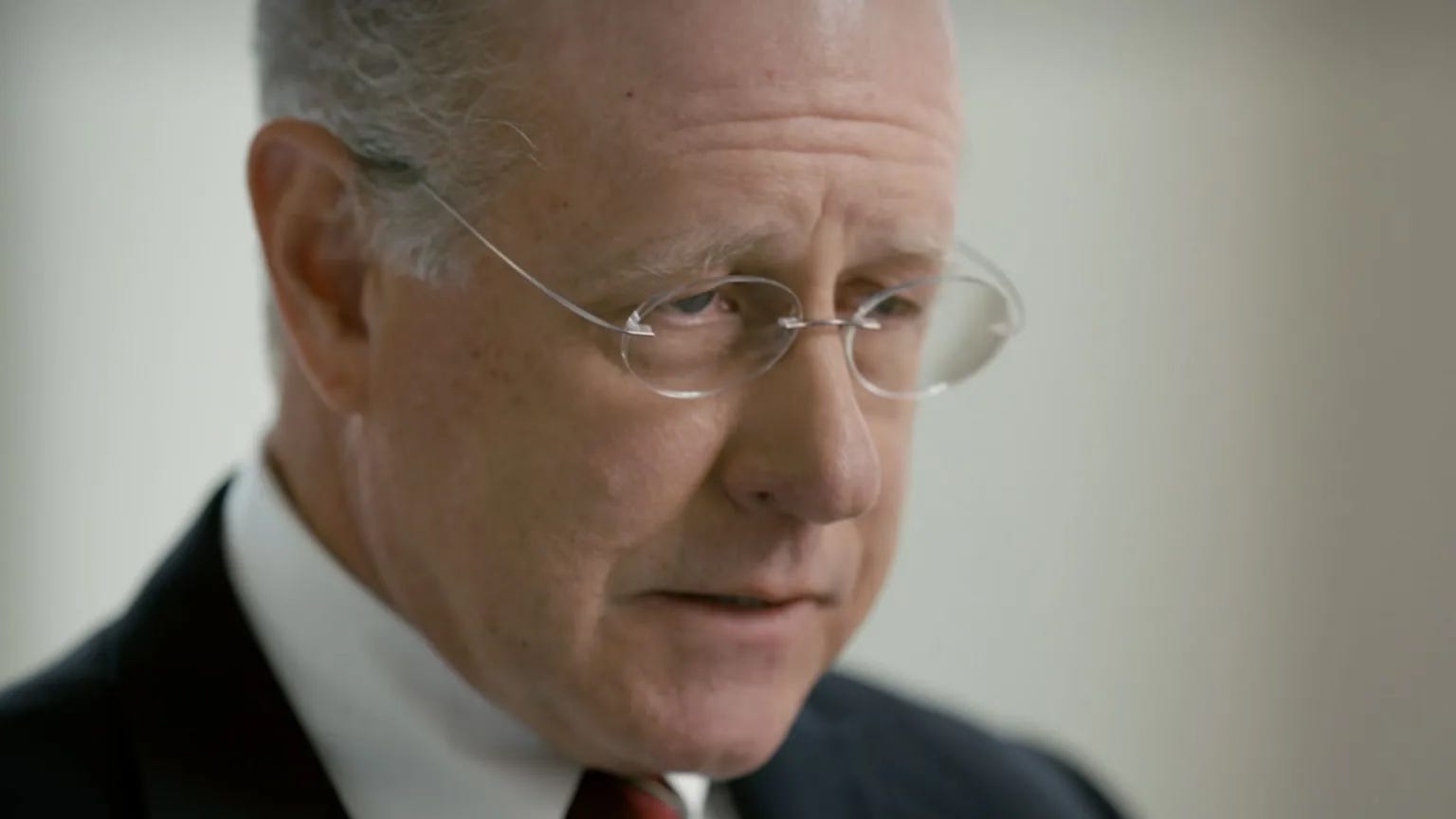
The Saudi government’s line, repeated for years, is tourism. Gina Bennett—a CIA counterterrorism analyst for twenty years—watched the tape for 60 Minutes and rejected it out of hand. “Who does a tourist video that is reporting back on, ‘This is where that building is, and here’s where the security guards are.’” Her conclusion, after the housing trail, the Capitol video, and the sketch: “Bayoumi was an Al Qaeda facilitator. He had sympathies with Al Qaeda—I mean ideologically—and that he provided substantial support to these two individuals, these two hijackers, without which they may very well have been caught.” Al Qaeda, she said, was too meticulous to throw two important operatives who spoke no English into an American city “without a soft landing, without a network there to catch them.”
Morell, looking at the same tape for the Times, went further still. “This is a casing video,” he told Schwartz. Then the crucial admission: “Bayoumi was either Al Qaeda himself, or he was working for them.” That is a former CIA deputy director, in the paper of record, saying the man on Bandar’s stipend channel was either in the global terrorist network or its instrument in San Diego.
The fact pattern speaks for itself. Bayoumi kept company with Saudi “propagators” whose contact trees brushed Ziyad Khaleel—the man who delivered a satellite phone to bin Laden before the 1998 embassy bombings. He waited by a café window for two known Al Qaeda travelers. He banked them, housed them, co-signed their lease, opened their bank account, threw a party he videotaped with one hijacker, and introduced them to people who got them IDs, English classes, and flight schools. Danny Gonzalez, the FBI’s Operation Encore lead who spent fifteen years on the San Diego case, told 60 Minutes the coincidence story is dead: “Who else did he help besides those two hijackers? I don’t know of any, and I couldn’t find any.” Gonzalez’s verdict: “He should be here under the court system.” Bayoumi currently lives in his home country of Saudi Arabia.
And he left behind, on a notepad seized in Birmingham, an airplane sketched in blue ink with a mathematical equation above it. British authorities turned the material over to the FBI within months. An internal FBI report dated October 11, 2001—cited on 60 Minutes—shows “copies of all recovered exhibits” were “sent to FBI-New York via Federal Express.” The Capitol video never reached San Diego. Gonzalez: “I had not seen that video.” Not him, not the San Diego case agents, not the New York case agents, and not the Joint Terrorism Task Force agents sitting beside them. “I don’t have that answer, and that—that angers me. When I saw that video, I knew exactly what it was.” Would he have taken it to the U.S. Attorney? “Absolutely.” It was a terror investigation, he said, “but it was also a mass murder.”
The notebook sat longer. In 2012, an evidence technician in Washington called Gonzalez out of the blue: boxes with Omar al-Bayoumi’s name on them were sitting in a warehouse, about to be relocated or destroyed. Did he want them? “Absolutely.” He had never known the sketch existed. Aviation and aerospace experts analyzed the equation for the FBI. A pilot could use it to calculate the rate of descent to hit a target on the horizon. Bayoumi’s own handwritten notes, read into the 60 Minutes record from his 2021 deposition, say “hight [of] the plane from the earth in mile” and “distance from the plane to hurrizen.” He admitted the sketch was his. Pressed for an explanation: “Perhaps this was an equation that we studied before in high school and I was trying to remember whether I’m going to be able to figure out and solve it or not.” Asked what the equation was for: “I don’t know. Just–just doesn’t matter. Just equation.” Judge George B. Daniels, when the defense floated the teenage-son homework theory in open court, asked the obvious question: “If he didn’t testify that this belonged to his 14-year-old son, why should we suppose that it does?” Last year the same judge found that the notebook page, on its face, “connects Bayoumi with knowledge of the 9/11 Attacks.” A separate 2017 FBI memo, citing source reporting, had already put the odds at “50/50” that Bayoumi had advanced knowledge the attacks would occur.
If Bayoumi was reporting to the Saudi GIP through Prince Bandar, while simultaneously serving Al Qaeda’s operational needs, that is the classic double game: the Saudi stipend as cover and paycheck, the California support network as the real mission. Saudi Arabia’s religious apparatus had long blurred the line between state Islam and private jihad. Facilitators moved charity money; clerics radicalized; intelligence officers watched dissidents and sometimes looked the other way. A man who could look like Riyadh’s eyes in San Diego while delivering what Khalid Shaikh Mohammed’s advance team required would be invaluable—and almost impossible to prosecute after the fact, once the US-Saudi alliance politics kicked in.
Theory Two runs the other direction: Bayoumi as Saudi intelligence’s probe into Al Qaeda—an attempt to penetrate, recruit, or at least babysit Hazmi and Mihdhar that escaped its handlers.
The CIA, by 2000, was starving for a source inside Al Qaeda. It had failed to place anyone useful in the camps or the inner circle. Hazmi and Mihdhar—known operatives who had just attended an Al Qaeda planning meeting in Kuala Lumpur that the agency had monitored—looked, on paper, like a recruiting opportunity. Then they flew to Los Angeles under their own names, and the CIA said, incredibly, it lost them.
For more than a year the FBI was not told two active Al Qaeda members were living openly in California. Richard Clarke, who ran White House counterterrorism across two administrations, later said the least-bad explanation he could invent for that silence was a bungled CIA recruitment effort—followed by a cover-up once the targets turned out to be suicide hijackers. Clarke admits he cannot prove it. The CIA denies it flatly. The denial has never explained the silence—and former CIA Director George Tenet, through his spokesman to the Times, said he was never made aware of the Capitol video or the plane diagram during his years at the Agency. Bennett told 60 Minutes that surprised her: in the immediate aftermath, Bayoumi was a suspect, and “we’re talking about the U.S. Capitol.” Resources after 9/11, she said, went to stopping the next plot. A casing tape of the Capitol should have gone to the top. “I think it should have because it’s the Capitol building.”
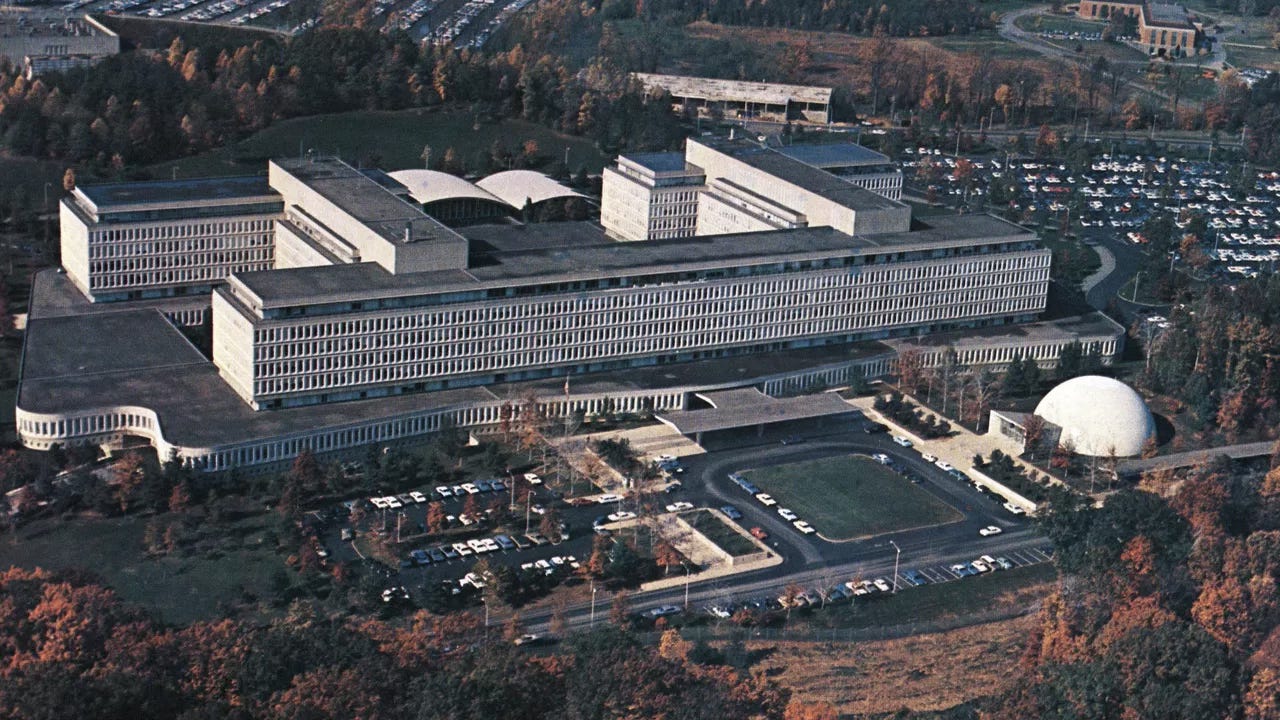
Author and journalist Lawrence Wright, and others, recorded what bitter FBI investigators suspected: that the Agency, legally barred from domestic operations, may have run a joint venture with Saudi intelligence to get around that wall. Saudis would have a better chance of approaching two young Saudis—no CIA fingerprints. ProPublica later reported the same speculation from former FBI investigators specifically attached to Bayoumi: that he might have been asked to approach the hijackers as part of a US or Saudi intelligence operation to recruit them. In that telling, Thumairy’s “tasking,” the staged café meeting, the apartment next door, even the introductions to local Muslims look less like hospitality and more like tradecraft—keep them close, learn their plans, try to flip them before they disappear into a plot. The Times notes what the lawsuit itself turns on: whether the California assistance was part of an orchestrated Al Qaeda plot, and whether Bayoumi and the others were acting within the scope of Saudi official duties when they provided it.
Former CIA operative John Kiriakou, writing about the declassified 27 pages, put the operational logic bluntly: it would have been entirely logical for the CIA’s Counterterrorism Center to try learning about Al Qaeda by having a friendly service run a false-flag approach on two known operatives. Because those men were on US soil, the Bureau should have been in the loop—and almost certainly would have arrested them instead. If someone chose Saudi channel’s preference to keep the FBI out, that choice itself becomes part of the crime scene.
Tragically, in the run-up to 9/11, the FBI never learned that Al Qaeda operatives were living openly in the United States.
Agents who tried to pull the Saudi thread hit a different wall. In October 2001, Lambert’s San Diego office asked to interview Saudi officials in the United States—many from Islamic Affairs—suspected of coordinating the help to Hazmi and Mihdhar. Agents require permission from FBI headquarters and the State Department. “The answer came back, ‘no, you’re not going to do that.’” Steve Moore, who oversaw the Los Angeles 9/11 investigation, applied the following year to interview a Saudi religious diplomat Bayoumi had met immediately after first encountering the hijackers. “We hit a roadblock so hard, I think we all had airbag burns.” Permission never came.
Gonzalez’s question still hangs over both theories: “So, who was running it?” If Bayoumi was Saudi intelligence, the operation’s runner sits in Riyadh or in Bandar’s embassy apparatus—Jarrah, the Islamic Affairs network, the same machine that paid ghost employees and “propagators.” If the runner was also serving American eyes, the files that would prove it are the ones successive attorneys general have buried under state secrets. If Bayoumi was freelancing for Al Qaeda while cashing a Saudi stipend, then the GIP either knew and tolerated it, or got played by its own asset. Each of those answers is damning. None of them is the story sold to the American people in the aftermath of the 9/11 attacks.
What the record now shows is egregious: a confirmed Saudi intelligence asset made himself indispensable to two of the most important early hijackers; American agencies lost or hid the paper trail for a generation; the Commission never saw the casing tape or the blue-ink plane-descent equation; San Diego’s own case agents never saw the tape that FedEx supposedly delivered to New York in October 2001; and the investigators who dug deepest keep arriving at versions of the same fork. Either Bayoumi was Al Qaeda himself, or he was working for them in some capacity.
Bennett’s last questions on 60 Minutes are as applicable now as they were then: “Who else? Were there other networks? Are any of those individuals still active here or elsewhere in the world? Is there any other evidence that’s sitting in a–in a box somewhere or, you know, locked up? And work from that new information to learn. To learn what you got wrong. To learn how not to get it wrong again.”
Humam al-Balawi, Another Al Qaeda Double Agent
If Bayoumi was indeed an Al Qaeda operative or sympathizer, he was in good company within the organization. The terrorist network has a history of employing double and even triple agents against its adversaries.
Take the case of Humam Khalil Abu-Mulal al-Balawi who, on December 30, 2009, walked onto Forward Operating Base Chapman in Khost, Afghanistan, a CIA facility hard against the Afghan-Pakistani border. Jordan’s General Intelligence Directorate had arrested Balawi years before for online jihadist propaganda under the name Abu Dujana al-Khorasani and believed it had turned him: a double agent who would penetrate Al Qaeda’s core in Pakistan and open a path to capturing or killing the organization’s number-two leader, Ayman al-Zawahiri.
The CIA, after years of ice-cold trails on bin Laden and his deputy, took over management of the case. Balawi fed them carefully chosen bona fides—after-action detail on drone strikes, medical specifics on Zawahiri that matched the American file. In the fall of 2009 he claimed a direct meeting with Zawahiri. Washington and Amman called him a golden source. They could not believe their luck, or so they thought. Finally, Zawahiri was almost in their sights.
The CIA and the Jordanians decided to meet Balawi face-to-face at Camp Chapman to debrief him and then organize a strike against Zawahiri in the Pakistani tribal areas. Instead, after waiving Balawi through base security without searching him or his car, he detonated a suicide vest and killed seven CIA officers and contractors and his Jordanian case officer, Captain Sharif Ali bin Zeid. It was among the deadliest days in the Agency’s history.
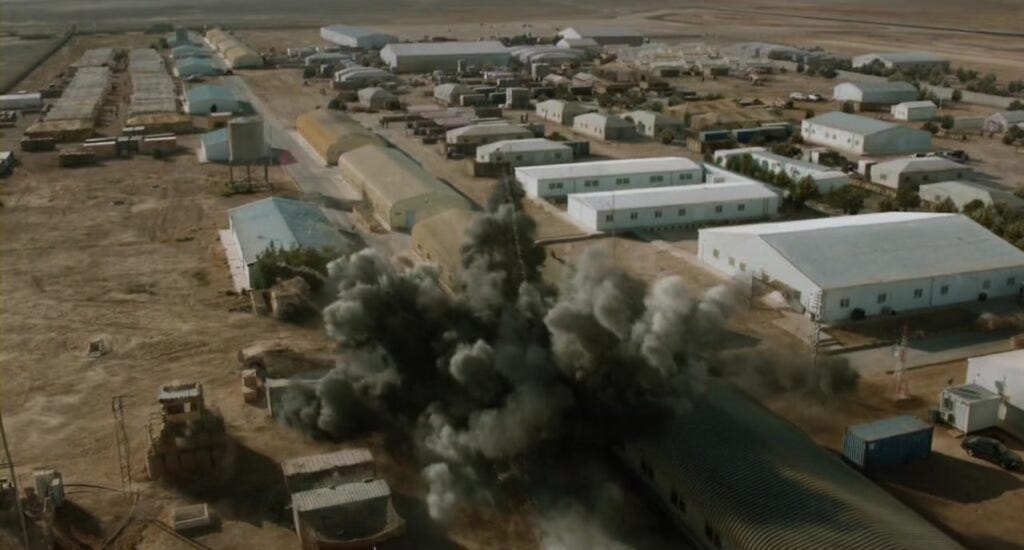
Al Qaeda did not merely hope Balawi would stay loyal. Senior figures used him as a triple agent and bait: feed the Jordanians and the Americans selected truth, deepen the hunger for a face-to-face, then kill the handlers who came to collect. Another Jordanian officer had warned a CIA counterpart, twenty-five days before Chapman, that Balawi might be playing both sides. The warning never reached Khost. Hunger for Zawahiri overrode caution. The attack on Chapman and the CIA was not a one-off success. It is a trademark of Al Qaeda—using double and triple agents to strike back at Western intelligence by inhabiting their recruitment fantasies and turning the would-be penetrator into a weapon.
New “Smoking Gun” Video Evidence
This September, Jane McMullen’s BBC Panorama and Radio 4 investigation put more of the Birmingham cache on the air—footage the FBI had within days of the attacks, and which the families’ lawsuit placed on the public docket on September 4, 2026.
Two “smoking gun” video tapes have emerged placing Bayoumi and Anwar al-Awlaki together in 1997 and 1998. Recall, Bayoumi repeatedly denied ever knowing Awlaki.
Awlaki was a radical cleric in Los Angeles who, in the years after the September 11 attacks, moved to Yemen, became an infamous Al Qaeda operative and propagandist, and was killed by a CIA drone strike on September 30, 2011—on direct orders from President Barack Obama.
The tapes are damning evidence. One clip, from January 1998, shows Bayoumi embracing Anwar al-Awlaki. In another, filmed near San Diego around 1997 or early 1998, Bayoumi and Awlaki are paintballing with an official from Saudi Arabia’s Ministry of Islamic Affairs: engaging in urban combat, wearing military fatigues, and charging around shouting “Allahu Akbar!” Bayoumi addresses Awlaki as “Sheikh Anwar.” The sessions ran for at least three years. After 9/11, FBI agents were told some of the participants were training for jihad. The Justice Department has used paintball evidence in other terrorism prosecutions.
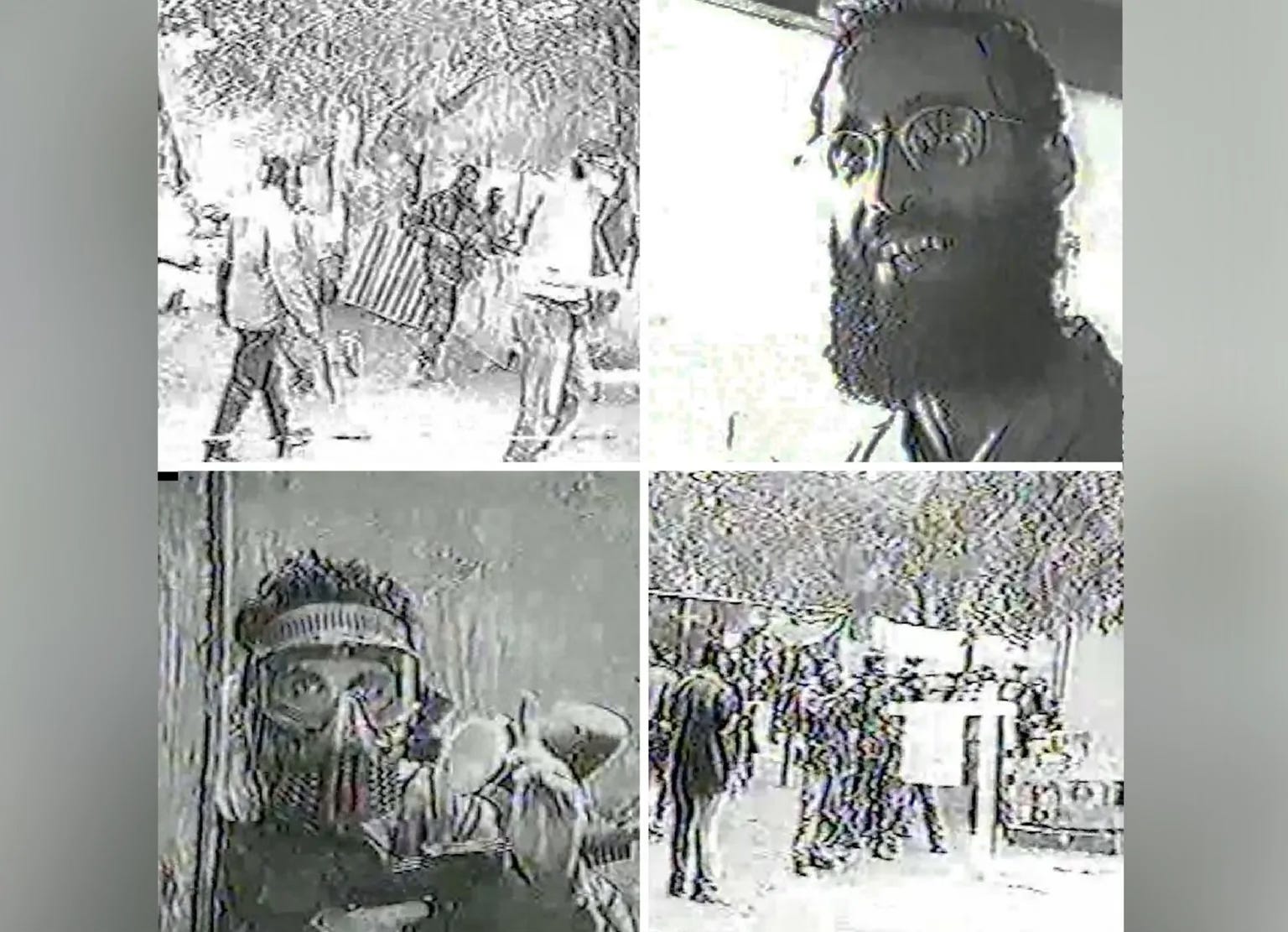
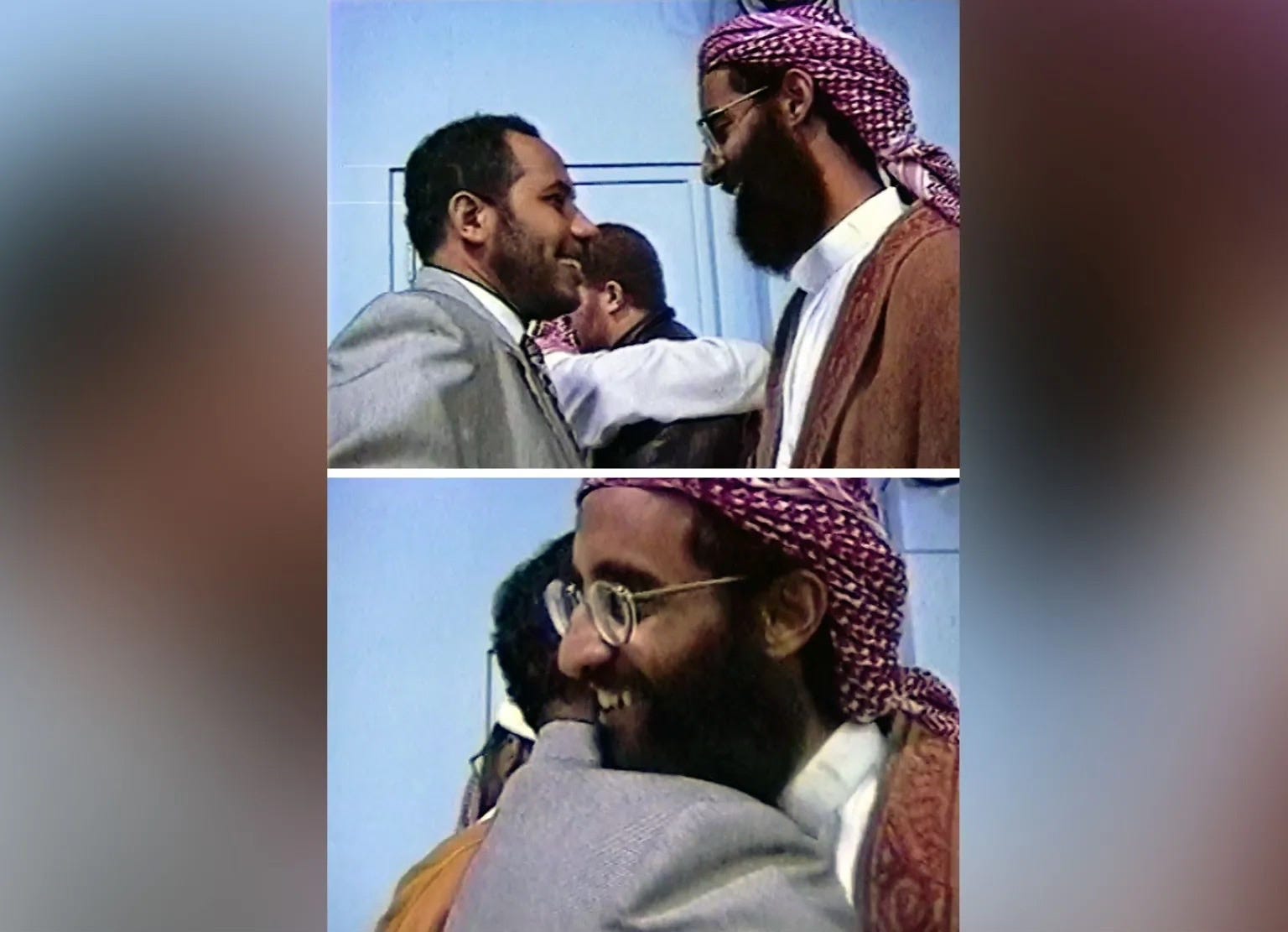
When Bayoumi was questioned remotely for the families’ lawsuit in 2021, he insisted he had not met Awlaki. The video contradicting him reached the court a year later, confidentially. Other clips record him with Ministry of Islamic Affairs officials—at SeaWorld, and at the San Diego mosque he founded with Saudi donor money and ministry support. The ministry, created in 1993, spent hundreds of millions exporting a hard-line version of Islam called Wahhabism, and sent dozens of officials into the United States.
The BBC’s new reporting thickens the Birmingham week itself. On the morning of September 22, 2001, British officers bagged the yellow notebook page and couriered it, at the FBI’s direction, to Paddington Green police station—meters from the suite where Bayoumi was being interrogated. By that evening, copies were in the hands of both the Bureau and UK counter-terror police, and they passed through at least three more FBI agents over the next two days. Detectives were briefed to ask about other high-priority exhibits. They were never given the diagram, and never told to ask about it. Carrier bags of tapes reached the custody suite by September 24. Officers played some of them. They were not briefed on the paintball session or on Awlaki.
On the day British law required a charge or a release, Metropolitan police detectives joined a conference call with senior Justice and FBI officials and, according to two participants who spoke to the BBC, laid out evidence they believed met the threshold for extradition. The American answer: insufficient evidence. Bayoumi walked out on September 28. Two weeks later, the FBI’s legal attaché in London noted that some videos, disks, and documents were still unreviewed. Among files later released under a 2021 presidential order, the Bureau produced a single document referring to the diagram—created eleven years after the page was found. A 2002 FBI/DOJ discussion of materials that could “demonstrate Omar al-Bayoumi’s anti-American sentiments and beliefs,” and of writings that “can be interpreted as jihadist,” made no mention of the paintball tape or of Awlaki. New York viewed the tape. It left the footage out of its summaries of Bayoumi’s extremist connections.
Jeffrey Breinholt, then deputy director of counter-terrorism at the Justice Department and the official who oversaw proposed terrorism charges after 9/11, told the BBC that Bayoumi had been one of the “hot possibilities.” The Southern District of New York never sent him a package. The diagram, he said, would have mattered. “We’ve convicted people for less.” The paintball tape, with Awlaki on it, was “pretty damn significant.” As a manager who reviewed terrorism cases, “that would have jumped out.” He thinks it was a material-support-for-terrorism case.
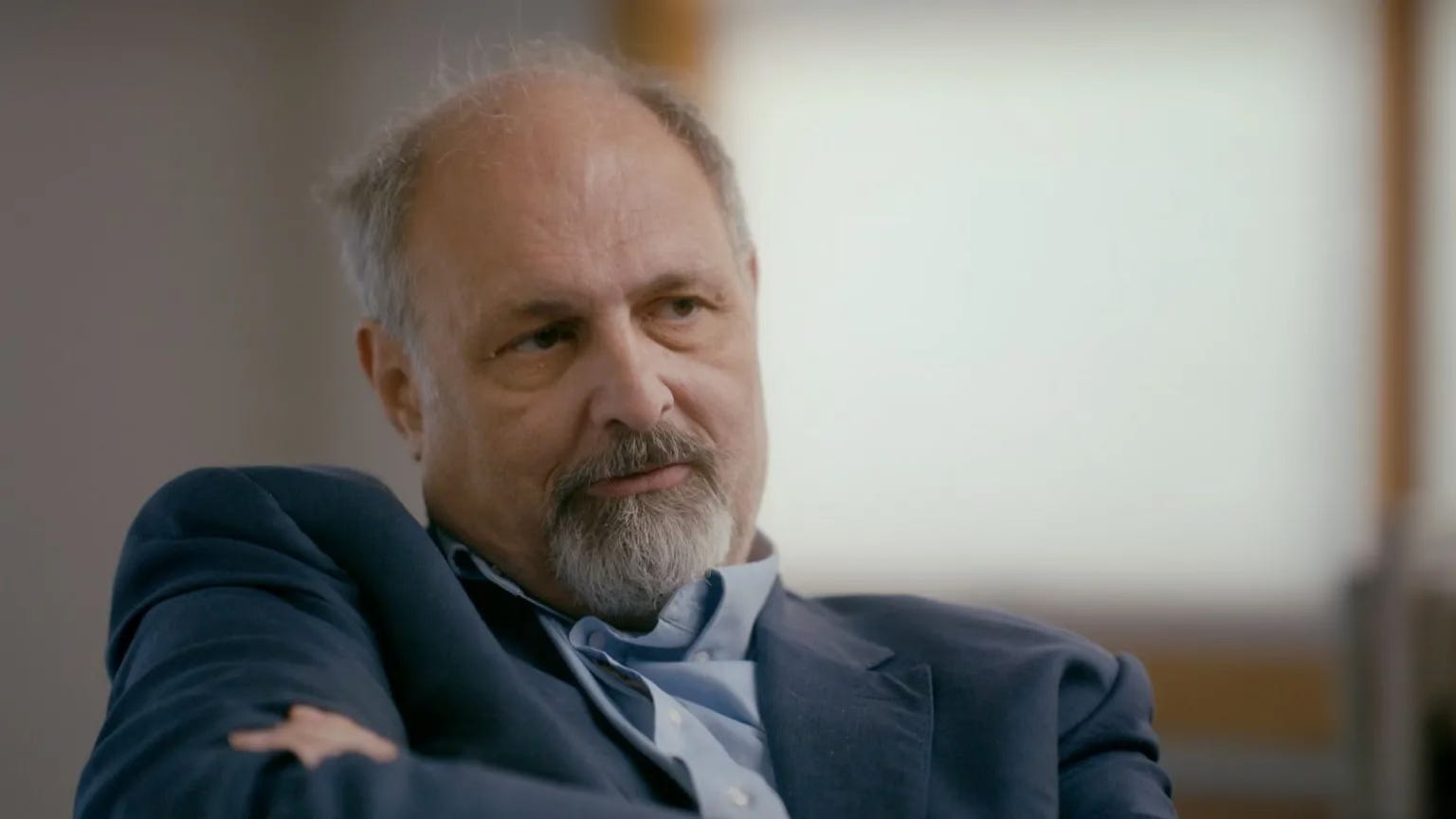
After the 60 Minutes broadcast, Senators Richard Blumenthal and John Cornyn sent the FBI a letter asking why “critical evidence” never reached the Commission or FBI field agents. The Bureau and CIA leadership have yet to answer them. They told 60 Minutes only that it would not discuss ongoing litigation. Riyadh’s motion to dismiss the 9/11 families’ suit insists neither the kingdom nor Bayoumi had anything to do with the attacks.
The remaining question is not whether Omar al-Bayoumi was a Saudi intelligence asset. The FBI already answered that. The remaining question is whose war he thought he was fighting when he opened the door in San Diego to two Al Qaeda hijackers—and who in Washington and Riyadh still prefers the answer stay in a warehouse or FBI/CIA safe somewhere.
* This piece is dedicated to the families of the victims of the September 11, 2001 terrorist attacks. This particular story was personal for me since I was in New York City on September 11, 2001, and witnessed the attacks that day. My personal account of those events can be found under My 9/11, recently published on this Substack.