
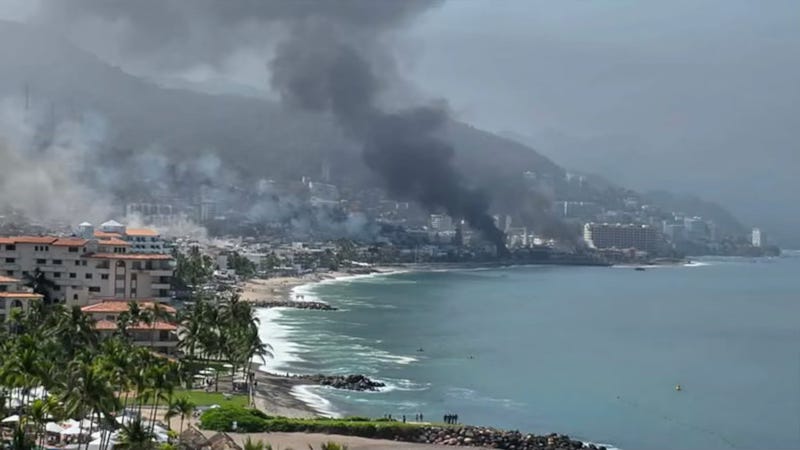
On the morning of Sunday, February 22, 2026, I awoke early to texts from a friend. The message was that my home, Puerto Vallarta, was under attack—that all roads were closed, cars and buses were burning, reports of gunfire, etc. I immediately went from bed mode into reporter mode, something that has not happened since the morning of the 9/11 attacks.
I quickly got dressed and raced out the door. I headed downhill to a coastal road that runs from Puerto Vallarta to the beaches and towns south of the city. Walking along the road toward the city’s famed Zona Romantica district, I came upon a passenger bus, parked across the road, and engulfed in flames. The first sign that something serious was going on.
Earlier that day, Mexican special forces—apparently aided by American intelligence information—raided a building in Tapalpa, Jalisco, where the leader of Mexico’s most powerful cartel organization was staying. The leader of Cartel de Jalisco Nueva Generacion (CJNG), named El Mencho, was killed in the ensuing firefight, along with his bodyguards. The authorities later revealed that one of El Mencho’s mistresses was under surveillance by Mexican and American intelligence, and she unknowingly led authorities to her lover’s doorstep in Tapalpa.
Retaliation for El Mencho’s death was swift and effective. The CJNG and its affiliated networks went on the offensive in 20 of Mexico’s 32 states. Major municipalities such as Vallarta, Guadalajara, Chapala, Morelia, Aguascalientes, Zacatecas, Nuevo Leon, and Tamaulipas were struck simultaneously. Neighboring states such as Nayarit, Michoacán, Colima, Guanajuato, and Guerrero experienced the worst of the violence. The unrest even reached up into Northern Baja.
Now the reality of this momentous event was before me. As I proceeded into Zona Romanctica, I encountered numerous passenger cars on fire. An OXXO store on a street corner was in flames. Curious tourists and locals were milling about in the street. Some attempted to put out the fires with garden hoses, which usually proved ineffective.
I went inside a condo and took the elevator to the roof to get a better sense of the situation. All across the neighborhood and the city, thick billows of black smoke rose into the air, turning the sky above into a dark mass, almost like a giant thundercloud. Fires—many fires—raged across Vallarta. This was no small operation; it was a widespread incursion into one of the country’s premier vacation destinations.
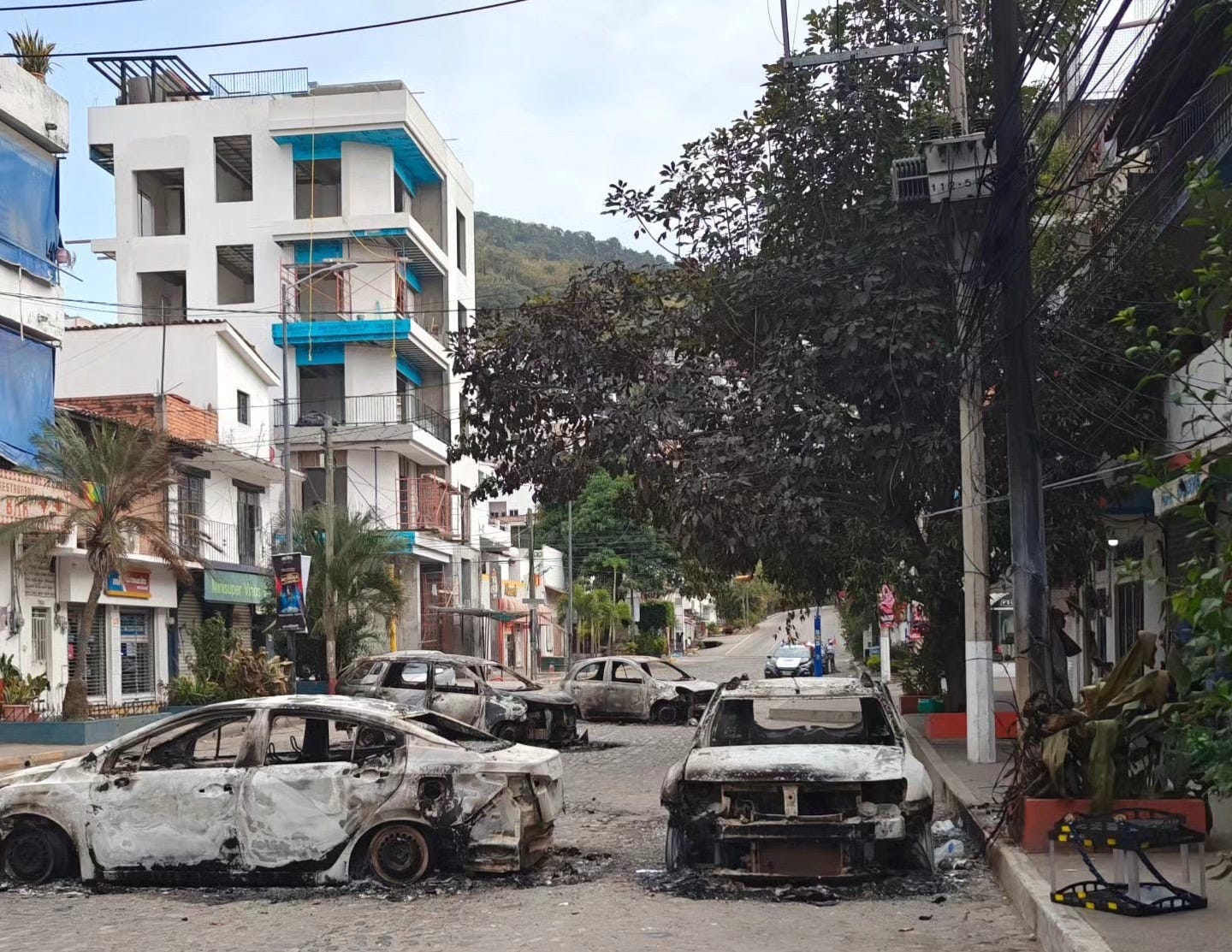
If the CJNG’s objective was to demonstrate their power, reach, and ability to retaliate, they certainly achieved it on Sunday.
It would be dishonest to say that there was a police or military presence in the streets. There was not. At the first sign of trouble, they had melted away, not to reappear until the later afternoon. Perhaps this was the safest strategy; for if the security forces had confronted CJNG members, there would have likely been many gun battles in the streets and many deaths.
That is precisely what occurred in the “Battle of Culiacán” of October 17, 2019, when federal military forces attempted to arrest Ovidio Guzmán López, the son of Sinaloa Cartel chief “El Chapo” Guzmán. What followed was a massive and deadly urban battle in Culiacán in which 600-800 cartel gunmen, equipped with heavy military weaponry, took on federal forces. The fighting became so intense that Mexican President Andrés Manuel López Obrador himself ordered the army to stand down and release El Chapo’s son to “prevent more bloodshed.”
I soon departed the roof and walked towards a bridge that connects Zona Romantica to the city’s “Centro” neighborhood. However, blocking the bridge was another passenger bus on fire. As I inched closer it became apparent the bus was about to explode, which it did. I barely had time to dart behind a street corner when a massive jet of flame burst from the bus’s right side, engulfing the first floor of a building next to it. The few onlookers scattered in all directions, trying to escape the giant flamethrower bus.
That route was clearly blocked, so I walked down to a path along the ocean, circumventing the bridge entirely.
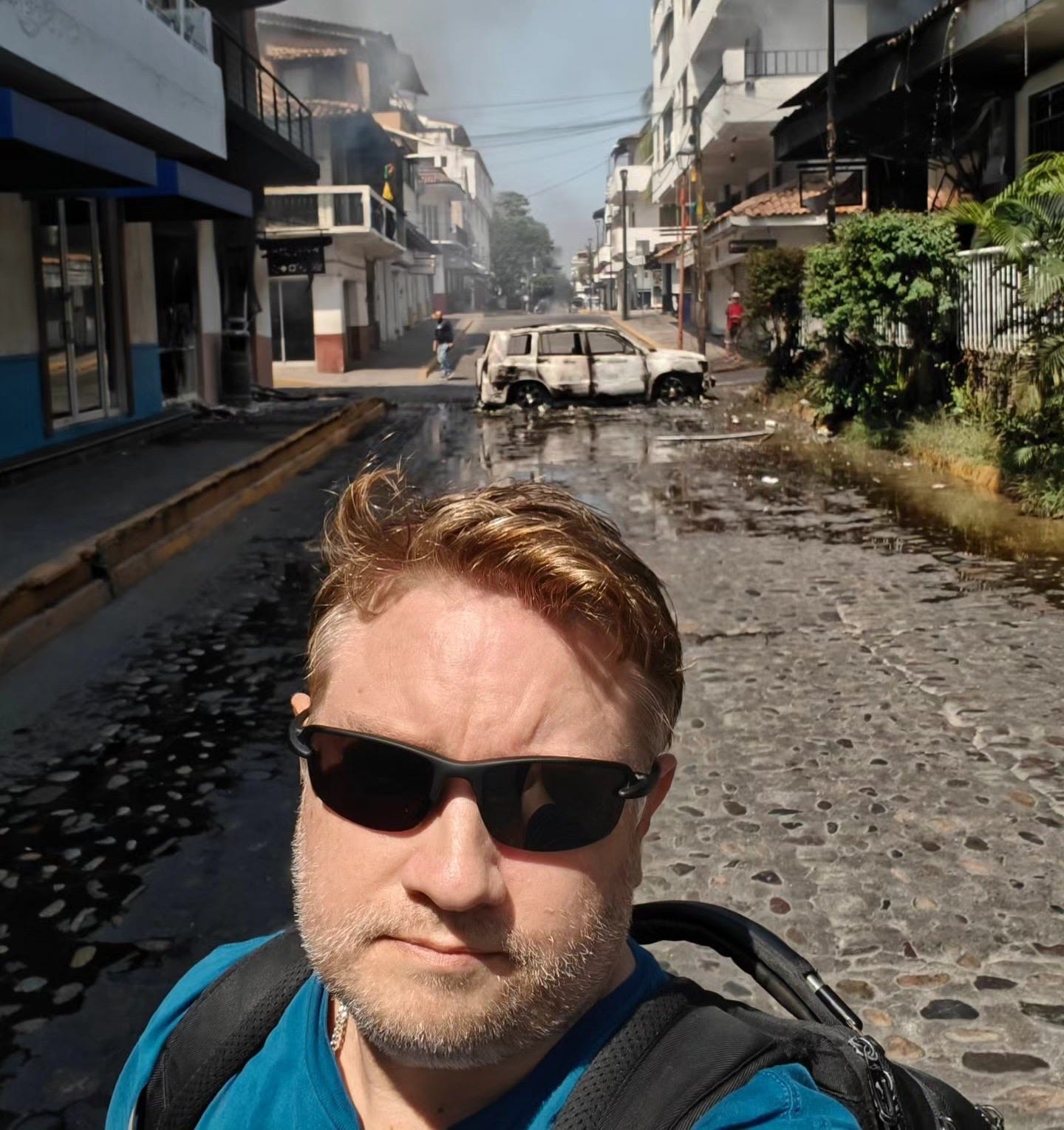
As I made my way into Centro, I came upon a burning car that had set fire to buildings on either side of the street. Three doors down, a hotel restaurant was still operating, surreally serving plates to guests lounging by a pool.
I made my way to the Malecon, a concrete promenade straddling the ocean that runs the length of the neighborhood. Burned-out buses littered the street on the side. At around 4:30 PM, a military convoy drove by. Troops in pickup trucks, with belt-fed machine guns mounted on top. Minutes later, municipal police cars followed and began parking at various intersections. It was the first sign of the security forces I had seen all day. Suddenly off in the distance, I heard the “womp, womp” of a helicopter’s blades cutting the air. A military helicopter approached from the ocean and flew directly above me at perhaps 150 feet. It disappeared over the rooftops of Zona Romantica, then reappeared, circling over the neighborhood for the next hour.
As I walked home, the sun setting behind the horizon, I tried to gather my thoughts. I had been in Puerto Vallarta for 8 years and had never seen anything like what just occurred. As a journalist, I had experienced civil unrest in other countries. Haiti, in the immediate aftermath of its 2010 earthquake, came to mind. La Paz, Bolivia, in 2004, when the army and police engaged in a brief street battle. But for some reason, I thought—in hindsight, a naive belief—the troubles of the world would never reach my home, Vallarta, the paradise city.
It has been two days since the unrest, and Puerto Vallarta is almost back to normal. The roadways are being cleared of debris, restaurants are reopening, and people are out on the streets and beaches. It is almost like nothing happened. The biggest reminder of Sunday’s events is the businesses that were burnt down. Those will take many months to rebuild. In the meantime, the question on many people’s minds here is whether this is the end of the troubles.
Great stuff! Glad youre safe
Stay safe!