
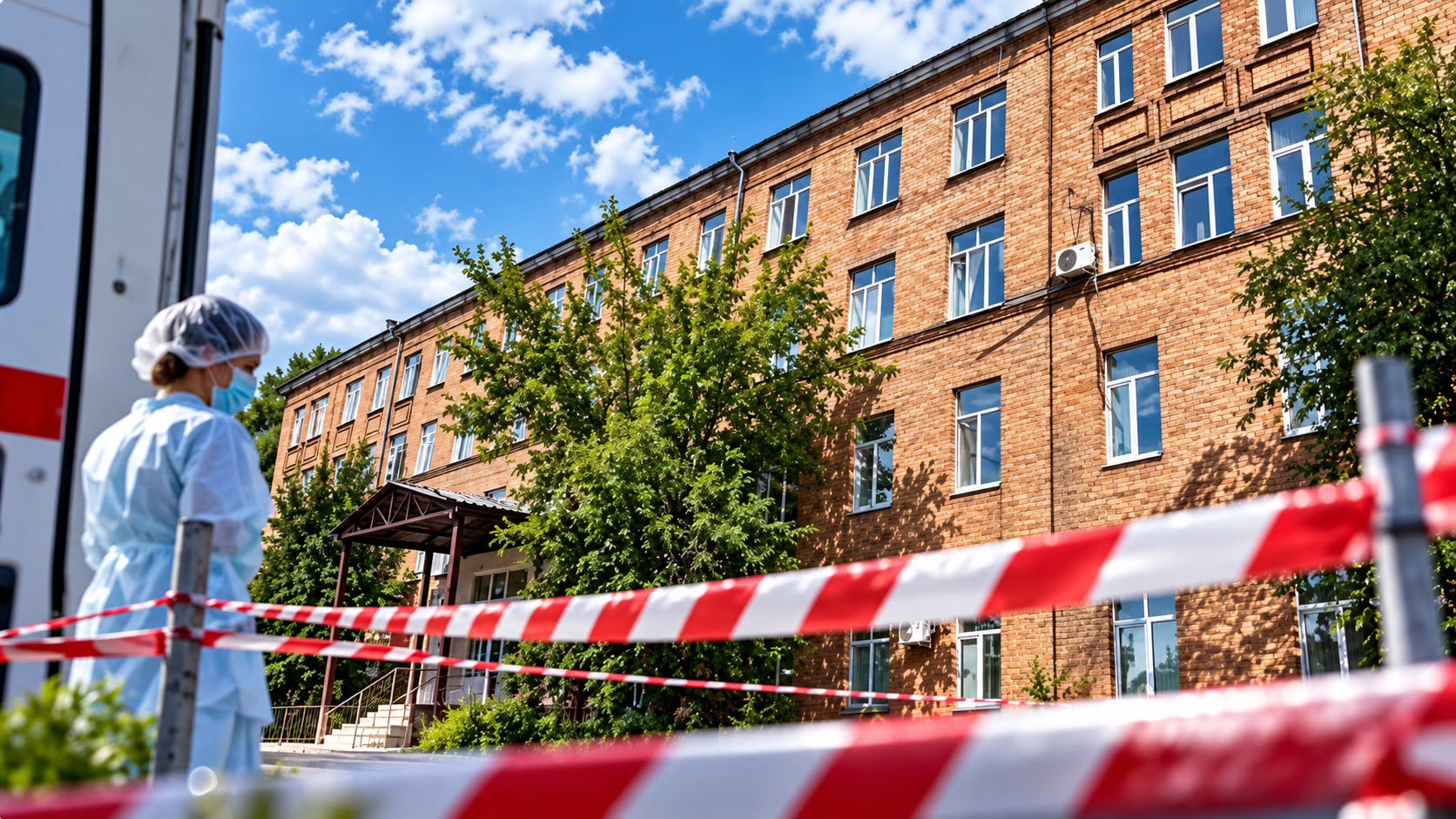
The word “Plague,” just like the word “Ebola,” instantly freezes humans with fear. Memories immediately return to the period known as the “Black Death” in Medieval Europe, where 40-60% of the population was killed by all three plague variants—Bubonic, Septicemic, and Pneumonic. Almost ten days ago, in a remote part of Russia’s Siberia, the plague struck again, officially claiming one life. Unofficially, many questions remain unanswered.
Darya Shipilova was 28 years old and worked as a lab technician at the Irkutsk Anti-Plague Research Institute of Siberia and the Far East. According to local independent reporting, around September 25 she broke a test tube containing live Yersinia pestis, the bacterium behind pneumonic plague. By the early hours of October 2, she was dead in the intensive care unit of the Shelekhov district hospital.

Russia’s consumer health watchdog, Rospotrebnadzor, says she died of “pneumonia of unknown etiology” and that plague had nothing to do with it.
Those two stories can’t both be true.
People of Baikal (Lyudi Baikala), an independent regional outlet, reported that the accident happened while Shipilova was working with live plague material. She was hospitalized around September 29, reportedly handled through a COVID-style pneumonia pathway, and put on a ventilator.
What followed does not look like the response to an ordinary pneumonia death. Hospitals were closed and quarantined, with periods of about three weeks reported. Somewhere between 197 and 200 contacts were placed under observation. Residents in Shelekhov saw people in full protective suits. Masks reportedly showed up at industrial plants and kindergartens. People in Baikal reported that FSB (formerly KGB) officers escorted some of the ambulances carrying contacts. Radio Free Europe/Radio Liberty reported that more than 60 staff at the institute itself were isolated.
You do not need the security service riding along with ambulances for a pneumonia of unknown origin. Either the authorities are being extraordinarily cautious about something they insist is not there, or they know more than they are saying.
Rospotrebnadzor’s line has been consistent: the situation is “stable,” no work-related microorganisms were found, and there was no pathogenic accident at the institute. TASS carried a follow-up saying plague was not responsible. That is the whole official account, and it arrives without the one thing that would settle the question: published diagnostic results.
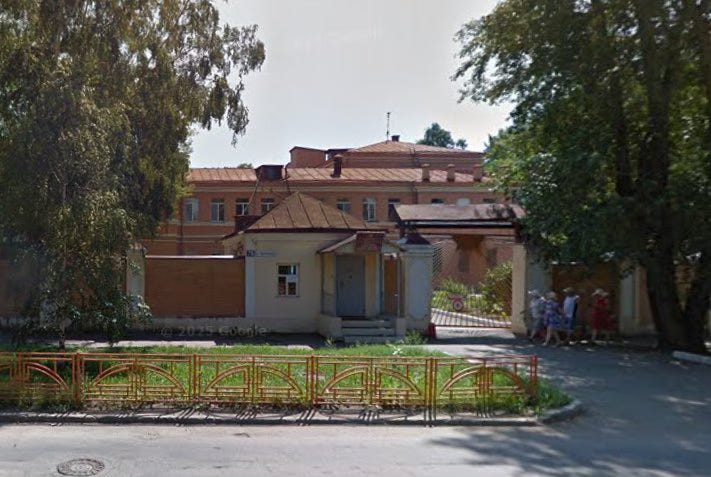
Alexey Tsydenov, governor of neighboring Buryatia, initially spoke of confirmed plague from a lab accident before softening that to “maybe.” When a sitting regional governor walks back his own words in a system like Russia’s, it’s fair to wonder who called him.
Washington noticed and has been watching closely. The US State Department told RFE/RL on October 4 that it was aware of reports of a fatal suspected pneumonic plague case in Irkutsk Oblast, was monitoring the situation with the CDC, and urged Russia to share accurate information openly.
Plague is treatable with antibiotics if caught early, but the pneumonic form, which infects the lungs, is the most dangerous. It can spread from person to person through respiratory droplets, and it moves fast; untreated, it’s usually 100% fatal. Inhalation exposure is also a known risk in labs that handle the bacterium, which is why these facilities run under strict protocols.
The Source
I have also spoken with a government source who has followed the case through their own contacts and who asked not to be named. Nearly everything they told me is secondhand, and I have not been able to confirm it independently.
Their view is that Shipilova was infected, period, and that the “unrelated pneumonia” explanation is a cover story. They were blunt about how they think it happened. They said that, supposedly, two other people have been infected. They also said that no one has gotten in or out of the district, which in an area that remote is easier to enforce than it sounds.
They passed along one more fact. According to what a friend told them the night before we spoke, Shipilova may have cut herself rather than broken a vial, and tried to hide it. That conflicts with the broken-tube account in local reporting.
When I raised the possibility of weaponized, aerosolized plague infecting her, they said they thought Russia had “had that a long time,” and added that they supposedly have aerosolized Ebola too.
The Soviet Union ran a vast covert biological weapons program, Biopreparat, whose scale the world learned about only after defectors talked. Ken Alibek, born Kanatjan Alibekov, its former First Deputy Director, defected in 1992 and said he oversaw some 32,000 employees and 40 facilities, with roughly 30 project curators coordinating more than 300 projects by 1990. In US congressional testimony, he described Soviet interest in genetically engineered antibiotic-resistant strains of anthrax, plague and tularemia, multi-drug-resistant glanders and melioidosis, and plague and tularemia strains with new virulence factors inserted. The doctrine, as he told it, was that the best agents have no prevention and no cure, so where a vaccine or treatment existed, as with plague, the task was antibiotic-resistant or immunosuppressive variants.
Vladimir Pasechnik, director of Leningrad’s Institute of Ultra-pure Biopreparations, defected to Britain in 1989. After debriefing him British intelligence concluded the USSR had developed a genetically engineered plague strain resistant to antibiotics. At Obolensk, Corpus One held forty two-story fermenter tanks inside Biosafety Level 4 containment; the work weighted heavily toward Yersinia pestis.
Both superpowers had programs to weaponize it in the 1960s. A 1970 WHO expert committee estimated that 50 kilograms aerosolized over a city of five million would cause about 150,000 cases of pneumonic plague and 36,000 deaths, work that underpinned the 1972 Biological Weapons Convention, in force from 1975, which the USSR signed while continuing its clandestine program.
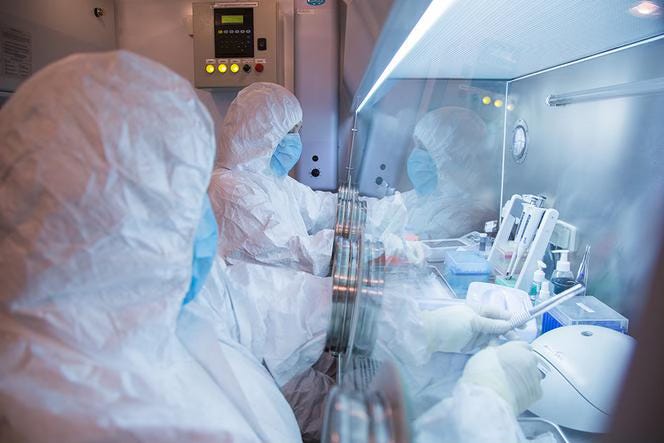
Nor did resistant-plague work end with the Soviet Union. A Russian study published in 2006 reported experimental polyresistant variants of the Y. pestis EV76 (NIIEG) vaccine line, with an R plasmid or transposons inserted, showing reduced susceptibility to doxycycline, amikacin and ceftriaxone. That is open scientific literature about a vaccine strain. But pneumonic plague passes person to person through a cough, so a multi-drug-resistant strain could, in principle, chain through a population. That is why Shipilova’s diagnostics matter: drug resistance is answerable by a laboratory test, and whether she was treatable is the question nobody has answered publicly.
These facts give legitimate fear to the possibility that what killed Shipilova on October 2 was no ordinary plague material. It was a genetically-modified, antibiotic-resistant, aerosolized strain of pneumonic plague that would cause untold deaths if it ever got out into the open.
That would explain why FSB agents in hazmat suits flooded into Irkutsk, and why the entire area is currently locked down.
If Rospotrebnadzor is confident plague was not involved, it can publish the diagnostics, name the pathogen it did find, and explain what the 200 people under observation are being watched for. “Unknown etiology” is not much of an answer from an agency with one of the country’s leading plague labs right down the road.